The day before: make the decisions
Start by deciding what you will serve and how you will serve it. A short menu with one or two things made ahead is easier to manage than several dishes that need attention at once. Check what you have, write a shopping list, and confirm any dietary needs you do not already know. If guests are bringing something, agree on where it fits into the meal so you are not counting on two desserts and no bread.
Choose the plates, glasses, serving dishes and utensils you will need. Put a note beside any dish that requires a specific spoon or platter. Wash what has been sitting in a cupboard, and set aside napkins and a tablecloth or placemats if you plan to use them. A simple mix of reusable pieces can look intentional when the colors and materials feel comfortable together.
Prepare any food that holds well overnight, then clear refrigerator space for what remains. Tidy the entry, bathroom and gathering area rather than trying to deep-clean the whole home. Make a place for coats and bags, check that there is soap and a clean hand towel, and empty the bins. These small tasks will matter more to guests than a spotless room they never enter.
The morning of: set the scene and protect your time
Look over the menu and work backward from the time guests are due. Note what needs chilling, reheating, chopping or assembling, and leave a little room between tasks. If something takes longer than expected, you can simplify a garnish or serve a dish at room temperature when appropriate instead of rushing every step.
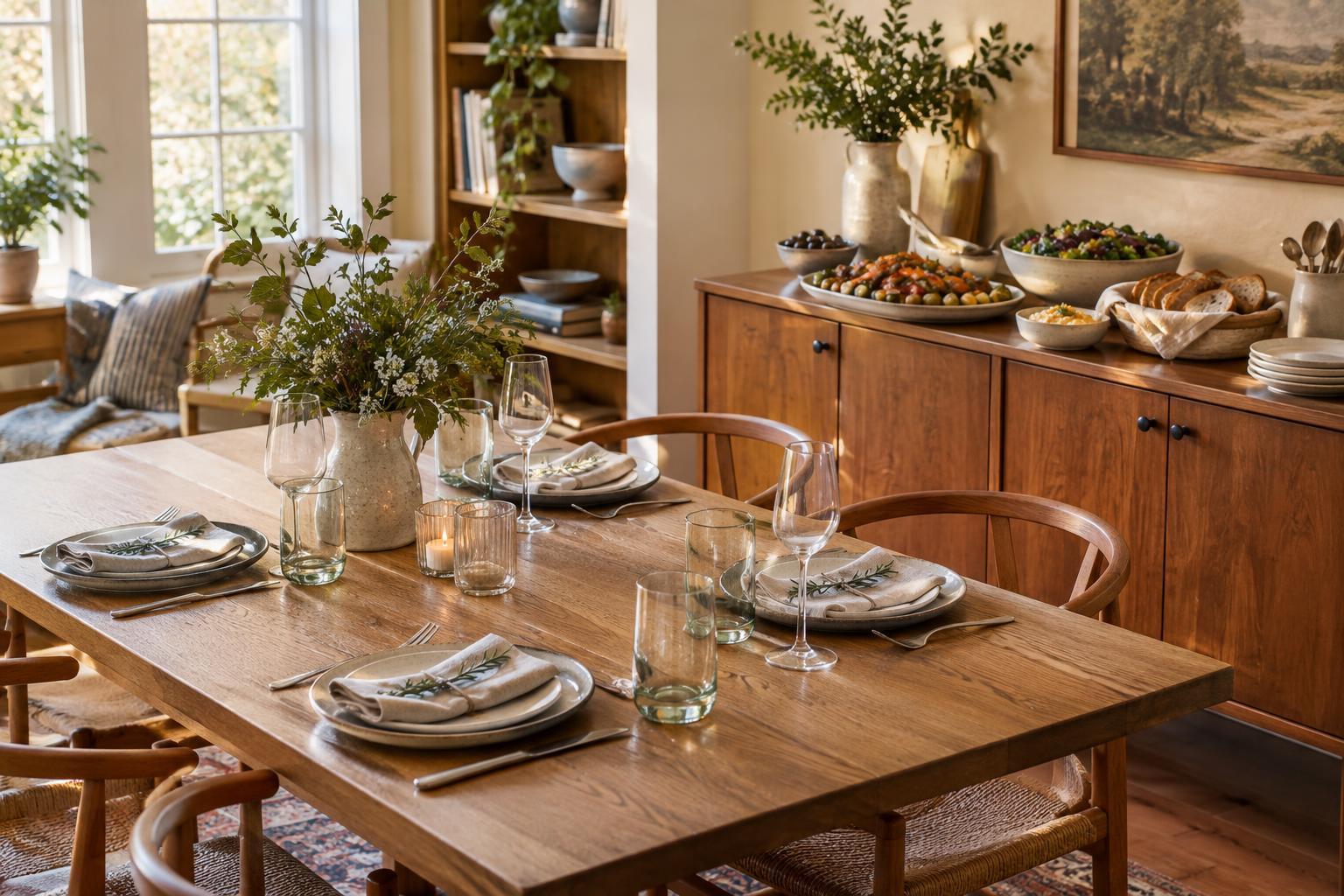
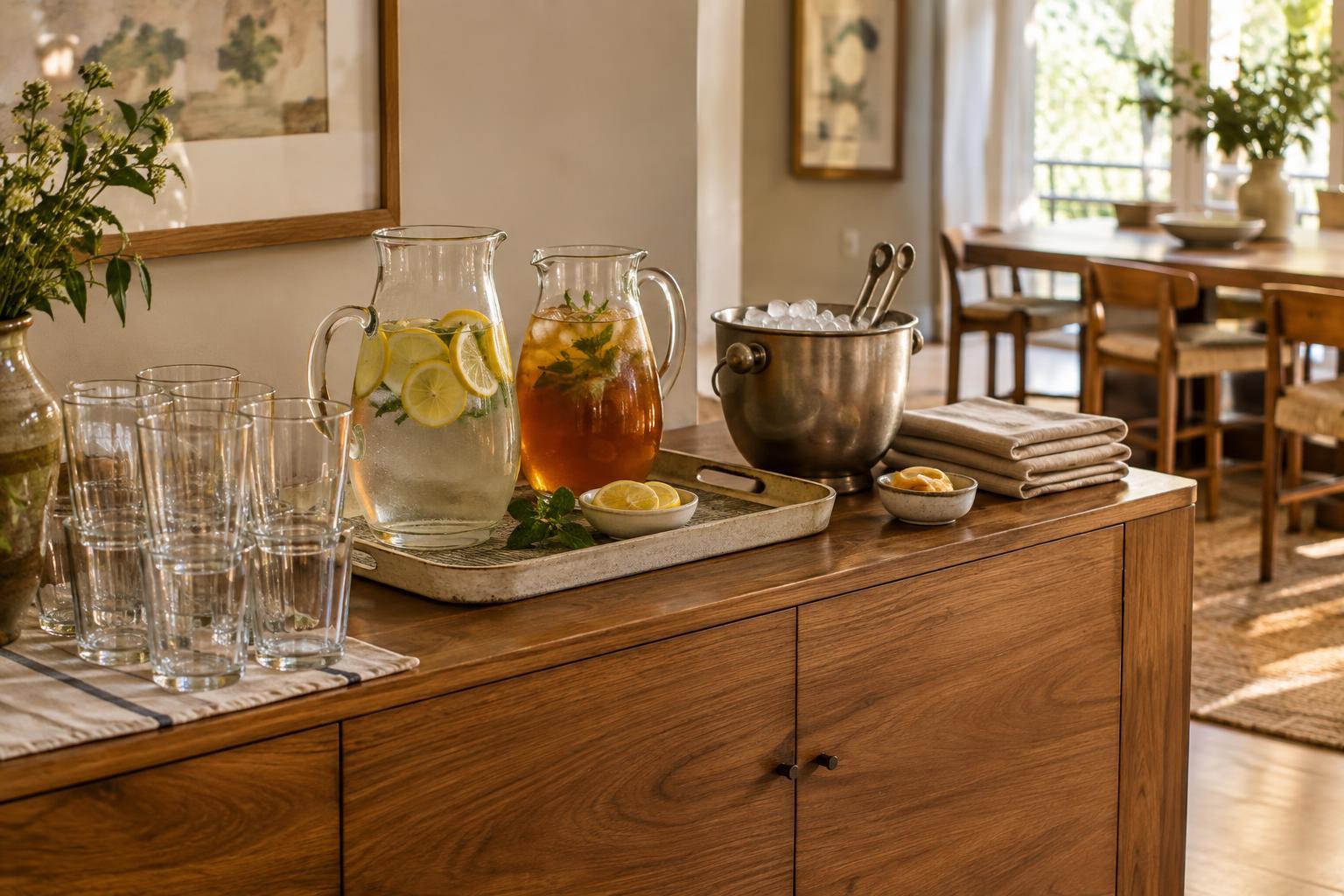
Set the table now if it will not be in the way. Otherwise, stack each place setting together and arrange the serving pieces on a sideboard or counter. Fill a water jug shortly before guests arrive, but decide where drinks and glasses will go in advance. A self-serve spot keeps guests comfortable while you finish a task or welcome someone at the door.
Add warmth with what you already own: a clean textile, a small bowl of fruit, or a few low decorations that will not interrupt conversation across the table. Check the lighting where people will sit. The goal is a space that is easy to move through and pleasant to spend time in, not one that needs constant adjustment.
Two to three hours before: do the active work
Move into the cooking and preparation that cannot be done the day before. Wash produce, assemble dishes according to your plan, and put finished items away safely until serving. Keep one clear area of the counter for last-minute work. As you go, load the dishwasher or wash a few tools; an empty sink is useful when guests arrive with a dish or when you need to rinse something quickly.
Take a brief walk through the guest spaces. Make sure there are enough seats, the path from door to table is clear, and the bathroom is ready. If you are serving snacks first, place them where people can gather without crowding the kitchen. Check that you have a spot for used glasses or plates, too. It is easier to point guests toward a tray than to collect things throughout the room.
The final hour: switch from preparing to welcoming
Finish only the tasks that genuinely need to happen close to arrival. Put out food that is ready to serve, make sure drinks are accessible, and check any dishes that still need heat or cooling. Set a reminder for a later oven task if it helps you stop watching the clock. Then wipe the most-used surfaces and put away the tools you no longer need.
Give yourself a few minutes to change, wash your hands and take a breath. Leave a small margin before the first expected arrival rather than planning to finish everything at the exact start time. If a dish is still underway, it is fine to welcome guests and explain that food will be ready soon. A relaxed greeting does more for the mood than a perfectly timed garnish.
From the first hello to the last arrival
Greet each guest, show them where to leave their things, and offer a drink. When someone arrives early, invite them into the ready part of the space rather than apologizing for work in progress. If they offer to help, give them a specific, easy task, such as carrying water to the table. You can also simply ask them to settle in.
For staggered arrivals, choose a snack that can remain available and keep the main meal flexible until the group is together. Introduce people who may not know each other, then let conversation take over. When the last guest arrives, give them the same unhurried welcome as the first. Your advance preparation has done its job: you can now turn your attention from the timeline to the people in your home.