Start with the kind of gathering you want
The choice between a buffet and a plated meal is less about formality than about how you want the gathering to move. A buffet lets people serve themselves, return for seconds and settle wherever they feel comfortable. A plated meal brings everyone to the table at roughly the same time. Both can feel welcoming; the better option is the one that suits your room, menu and capacity to serve.
Picture the first fifteen minutes after the food is ready. Is there a clear place for everyone to sit, or would guests be happier circulating between a table, sofa and kitchen counter? Do you want one shared conversation, or a looser evening with several small groups? Those answers are often more useful than the number of guests alone.
When a buffet makes the evening easier
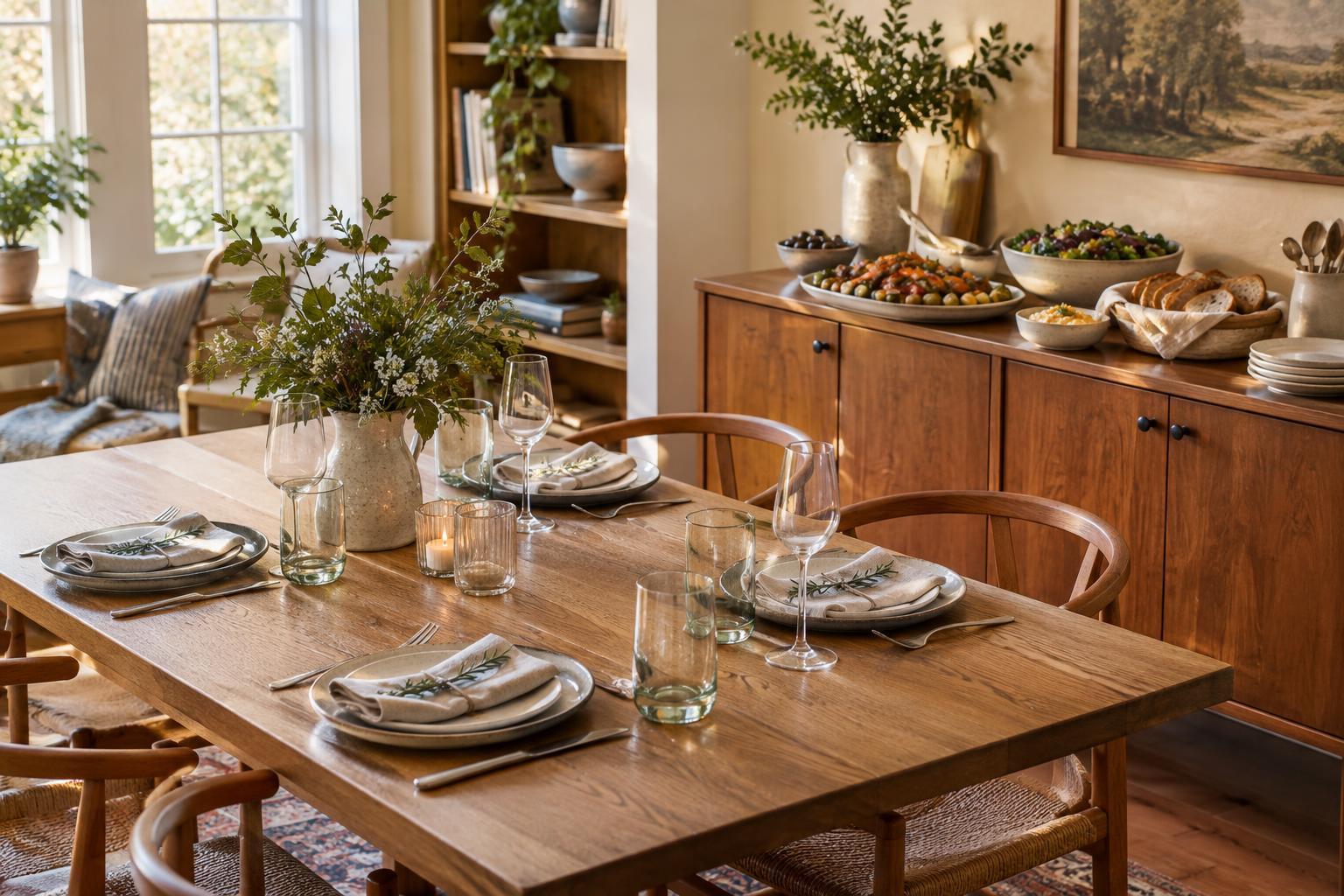
A buffet works especially well when people may arrive or eat at slightly different times, or when the menu offers choices. Guests can take the portions and combinations they prefer without a host having to remember every request. It can also spare a small dining table from holding serving dishes alongside plates and glasses.
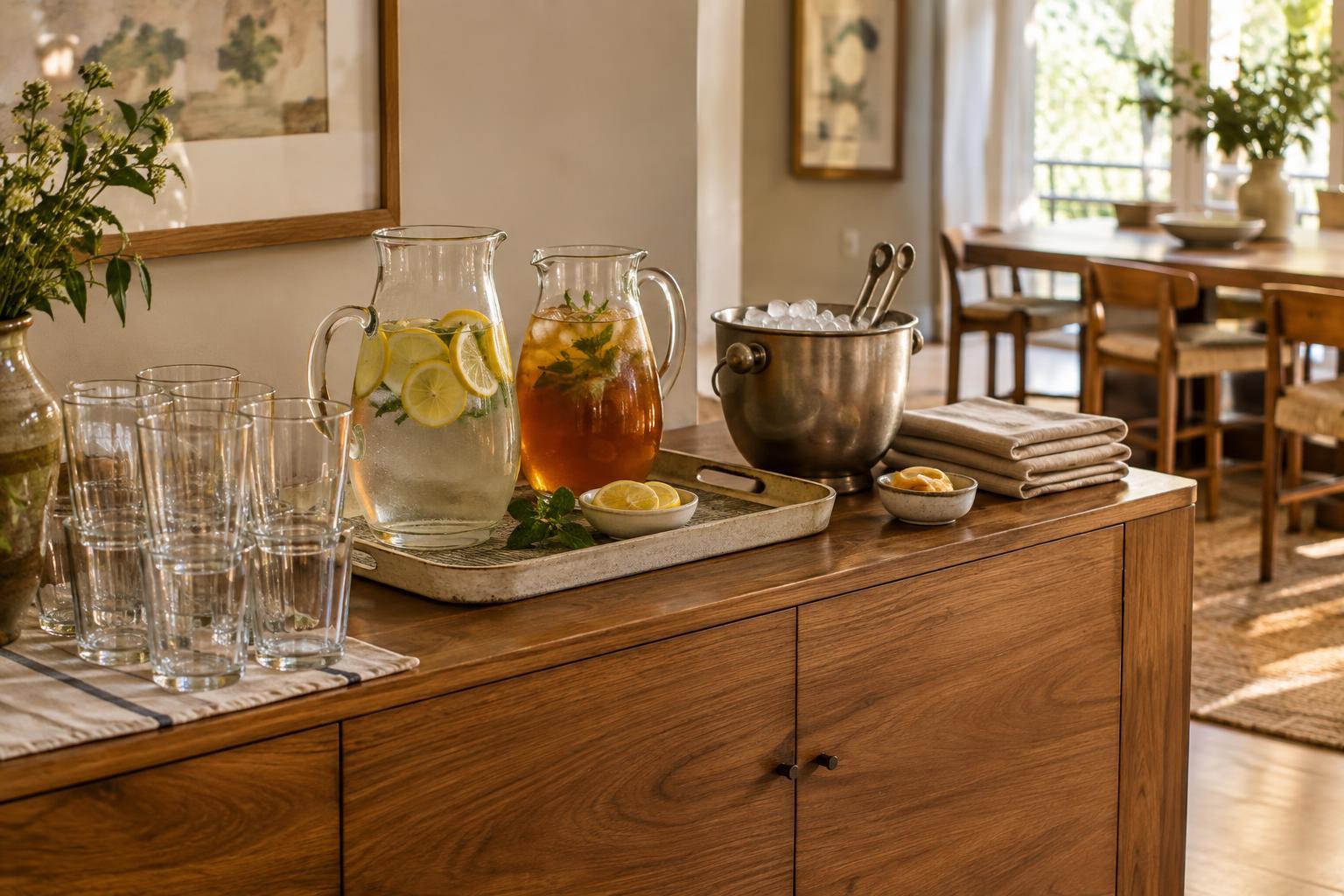
For a comfortable flow, arrange the buffet in the order guests will use it: plates first, then food, with cutlery and napkins at the end if they are easy to pick up while holding a plate. Give popular dishes room so people are not reaching across one another. If space allows, put drinks somewhere separate from the food queue. Choose dishes that are pleasant at serving temperature, and replenish smaller platters as needed rather than setting out everything at once.
The trade-off is movement. Guests need somewhere to place a plate while serving themselves and a practical spot to eat afterward. Foods that require cutting or balancing several sauces can become awkward without a table. If much of the room has soft seating, favor fork-friendly dishes and make sure there are enough stable surfaces for glasses.
When plated service feels more relaxed
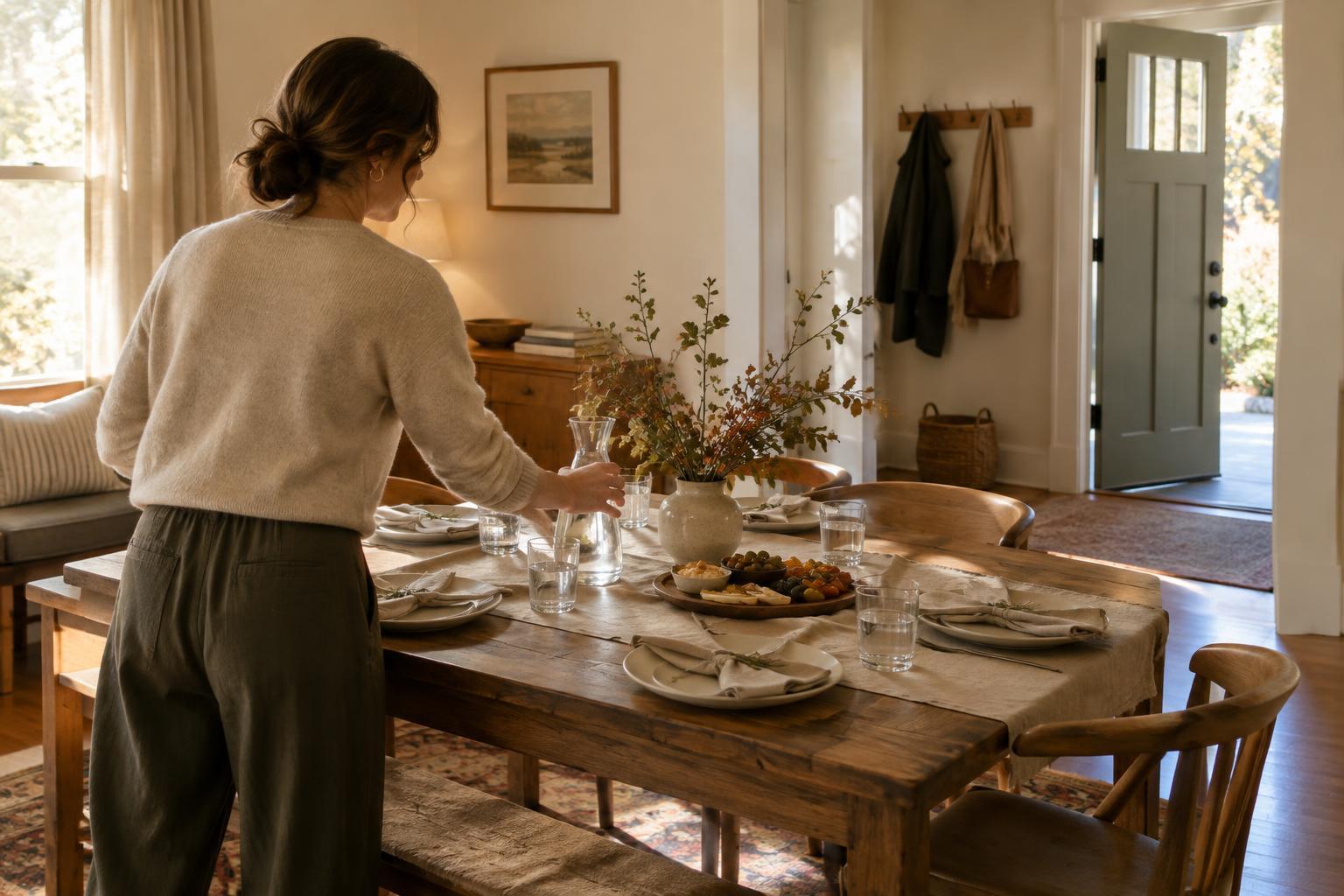
Plated food can be the simpler choice when everyone has a seat and the menu centers on one dish. It avoids a line at the counter and encourages a shared start to the meal. A casual plated dinner need not mean elaborate presentation: a generous portion, a simple side and a bowl of something extra on the table can feel easy and hospitable.
It does ask more of the host at one particular moment. Check that you have room to set down plates as you fill them, and choose food you can portion without last-minute assembly. If guests have different preferences, ask about them ahead of time and keep any adjustments straightforward. Serving from a pot or baking dish at the table can offer much of the togetherness of a plated meal with less work in the kitchen.
Let the menu and space make the decision
Think about what the food needs once it is ready. A selection of salads, roasted vegetables, bread and a main dish that is easy to portion lends itself to a buffet. A meal with a sauce best added just before eating, or a dish that is easiest to carry already assembled, may be better plated. Either way, set out the plates, serving utensils and places to put used dishes before guests arrive.
Then walk through the room as a guest would. Can someone reach the food without squeezing past seated people? Is there a clear route back with a full plate? At a dining table, can everyone pass a bowl comfortably? Small changes, such as moving a chair or placing water in two spots, often do more for ease than changing the menu.
A hybrid approach can be the sweet spot
You do not have to commit to one style for the entire meal. You might invite guests to help themselves to drinks and a starter, then sit down for a main dish. Or you might plate the main course and leave bread, salad and condiments in the center of the table. For dessert, a simple self-serve station can bring back the freedom of a buffet after the seated part of the evening.
Choose the approach that lets you spend more time with your guests. A clear place to find food, comfortable places to eat and a host who is not stuck assembling plates are more important than perfect coordination. When the serving plan fits the gathering, both a buffet and a plated meal can feel genuinely casual.