Start with the surfaces you use every day
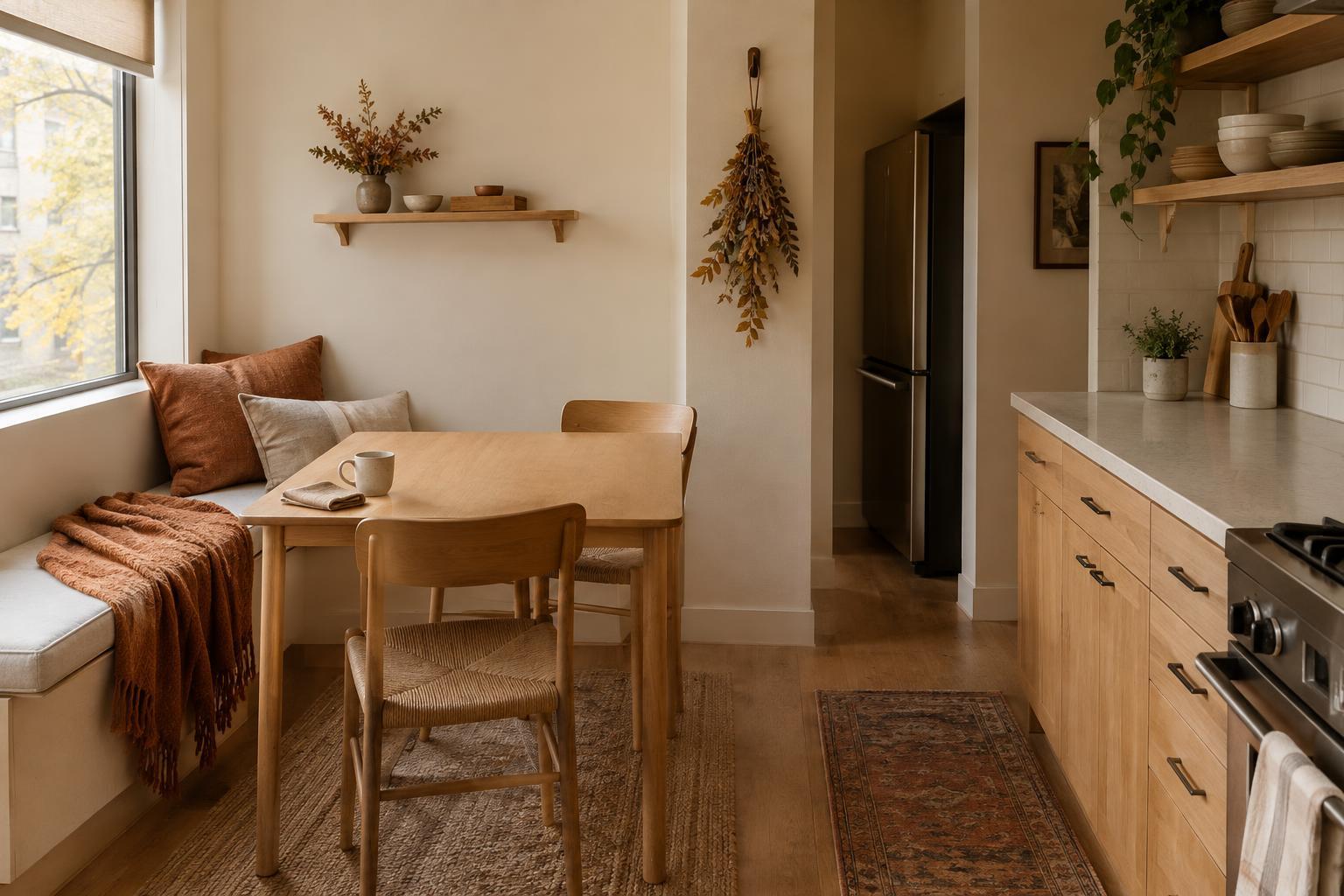
Before bringing out seasonal decorations, notice where daily life happens. The kitchen counter may need room for preparing meals, the dining table may double as a workspace, and the entryway shelf may hold keys and mail. Treat those areas as working space rather than empty space waiting to be filled. A clear surface can make a seasonal detail nearby feel more intentional.
Choose a few places where decoration will not interrupt a routine: a wall beside the table, the back of a chair, a window, or a narrow section of shelving. If an object must be moved whenever you cook, eat or set down a bag, it may need a different home. This simple test helps keep a small room pleasant to use after the decorating is done.
Let textiles carry the seasonal color
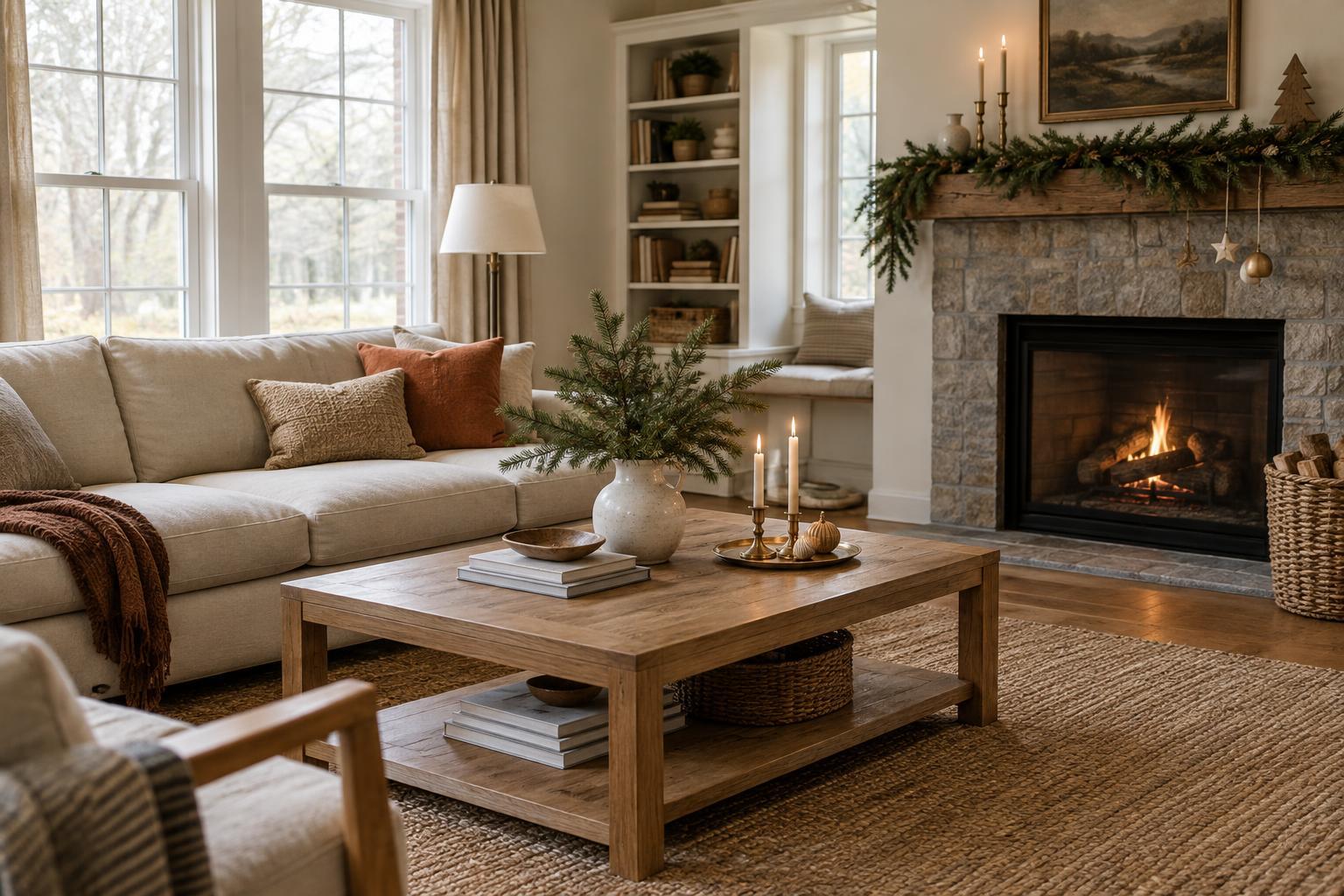
Textiles can shift the mood of a room without taking up a counter. Try changing cushion covers, a throw or a curtain tieback in a color or texture that suits the season. A light cotton cover can feel fresh and relaxed; a heavier weave can add a sense of warmth. You need not replace every textile at once. Repeating one accent color in two places is often enough to make the change feel considered.
At the table, use a runner only if it will stay out of the way of plates, laptops or other daily essentials. Otherwise, save it for meals when you want a dressed-up setting. Cloth napkins are another compact option: they add color when the table is set, then return to a drawer. Choosing washable pieces that work with your existing tableware makes them easier to reuse.
Use vertical space without crowding it
Walls, doors and windows offer display space while leaving furniture free. A small wreath on an interior door, a strand of simple ornaments along a shelf edge, or a seasonal print in a frame you already own can change the feel of a room. Keep the arrangement restrained so the useful parts of the space remain the focus.
Pay attention to how a display is attached. Removable hooks may be convenient on suitable surfaces, but check the product guidance and test an inconspicuous spot if you are unsure about the finish. Keep hanging pieces clear of door swings, window hardware and walkways. A decoration that catches on a coat or blocks a window is likely to become a daily nuisance.
Give displays a boundary and a purpose
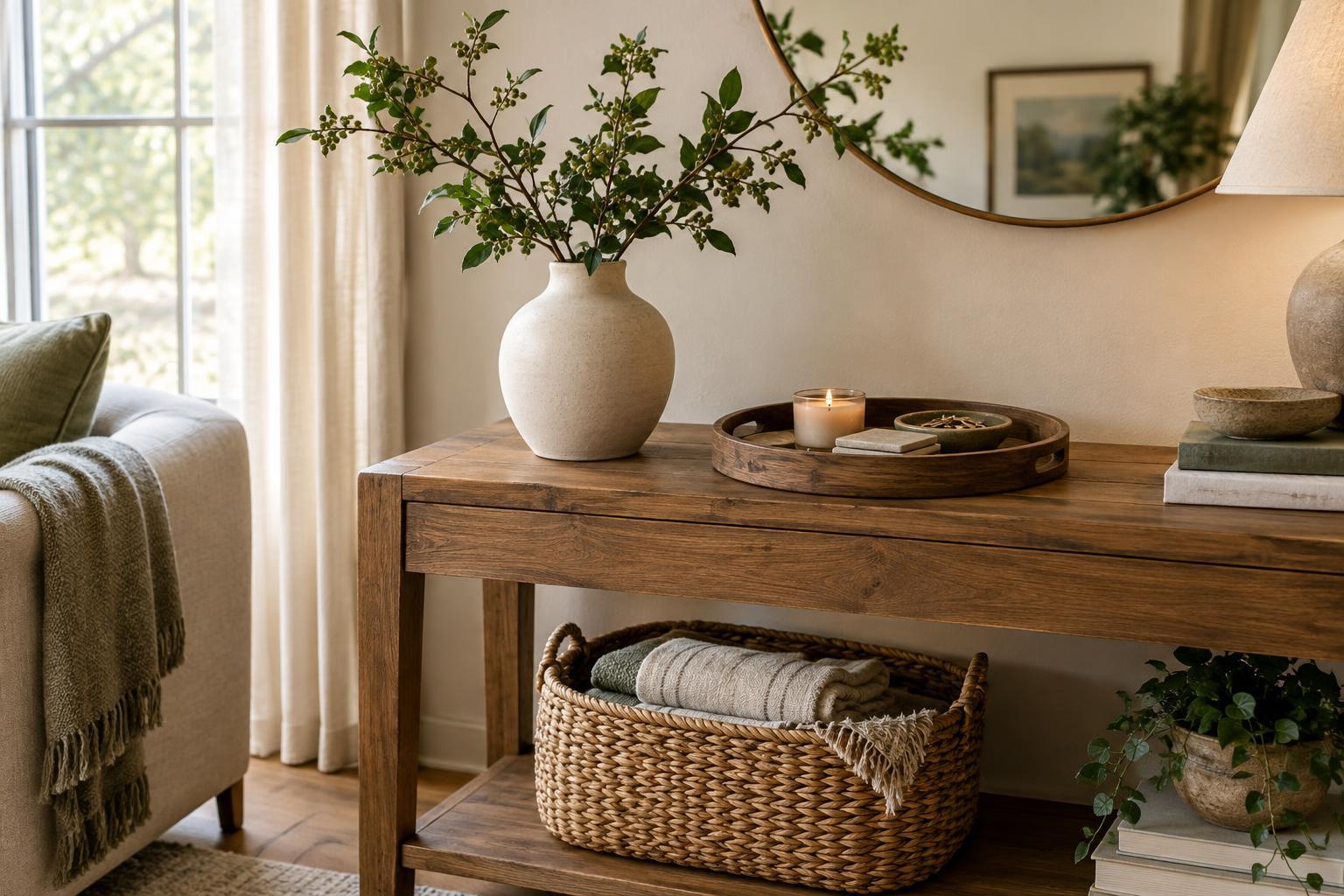
If you enjoy objects on a shelf or side table, give them a defined area rather than scattering them through the room. A shallow tray on a less-used shelf can hold a candle holder, a small vase or a few seasonal items. The tray sets a limit: when it is full, swap something out instead of expanding the display. Where flames, children or pets are a concern, choose an unlit accent or a battery-operated light instead.
Useful objects can also do some of the decorating. A basket for throws, a row of everyday mugs in a seasonal color, or a pitcher holding branches can add character while serving a purpose. For natural materials, select pieces that are clean and dry, and place them where they will not shed onto food-preparation areas. One purposeful detail tends to be easier to live with than several objects competing for the same spot.
Make the change easy to reverse
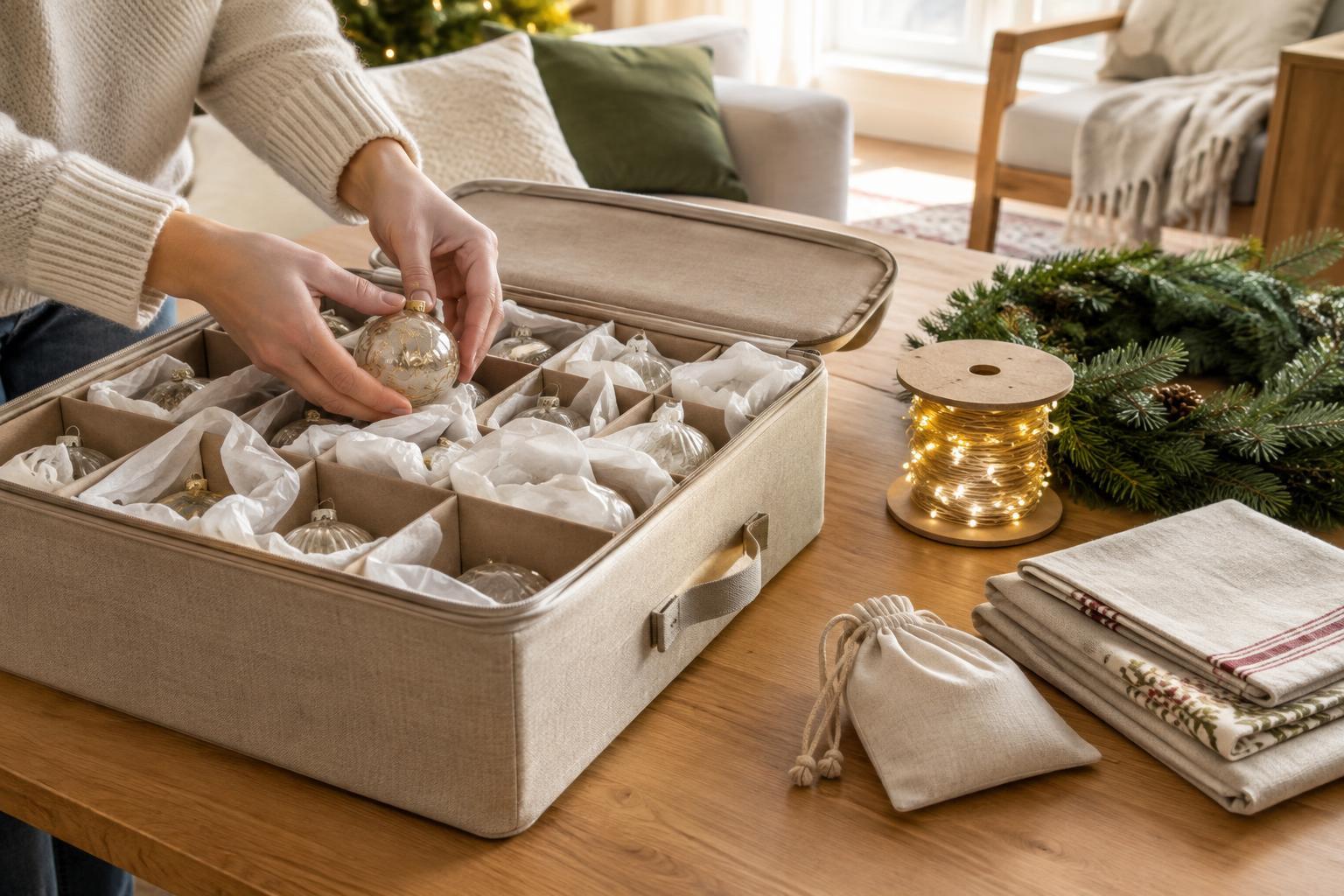
Small-space decorating works best when putting things away is as simple as putting them out. Before buying a new accent, consider where it will be stored and whether it can suit more than one season. A neutral vase, reusable ribbon or set of cushion inserts can support different looks without requiring a separate box of supplies for each occasion.
When you refresh a room, remove the previous seasonal pieces first. Then add back only what earns its place. Step into the room and check whether you can still set the table, open a drawer and move comfortably through the space. Seasonal decorating should make an everyday home feel welcoming, not ask the household to work around it.