Start with what is already working
Before unpacking decorations, look around the room you plan to dress. Notice the colors you see most often, the materials you repeat and the feeling you like the space to have. A room with pale woods and relaxed linen may call for a different festive touch than one with dark furniture, patterned rugs and polished metal. Neither needs a complete makeover.
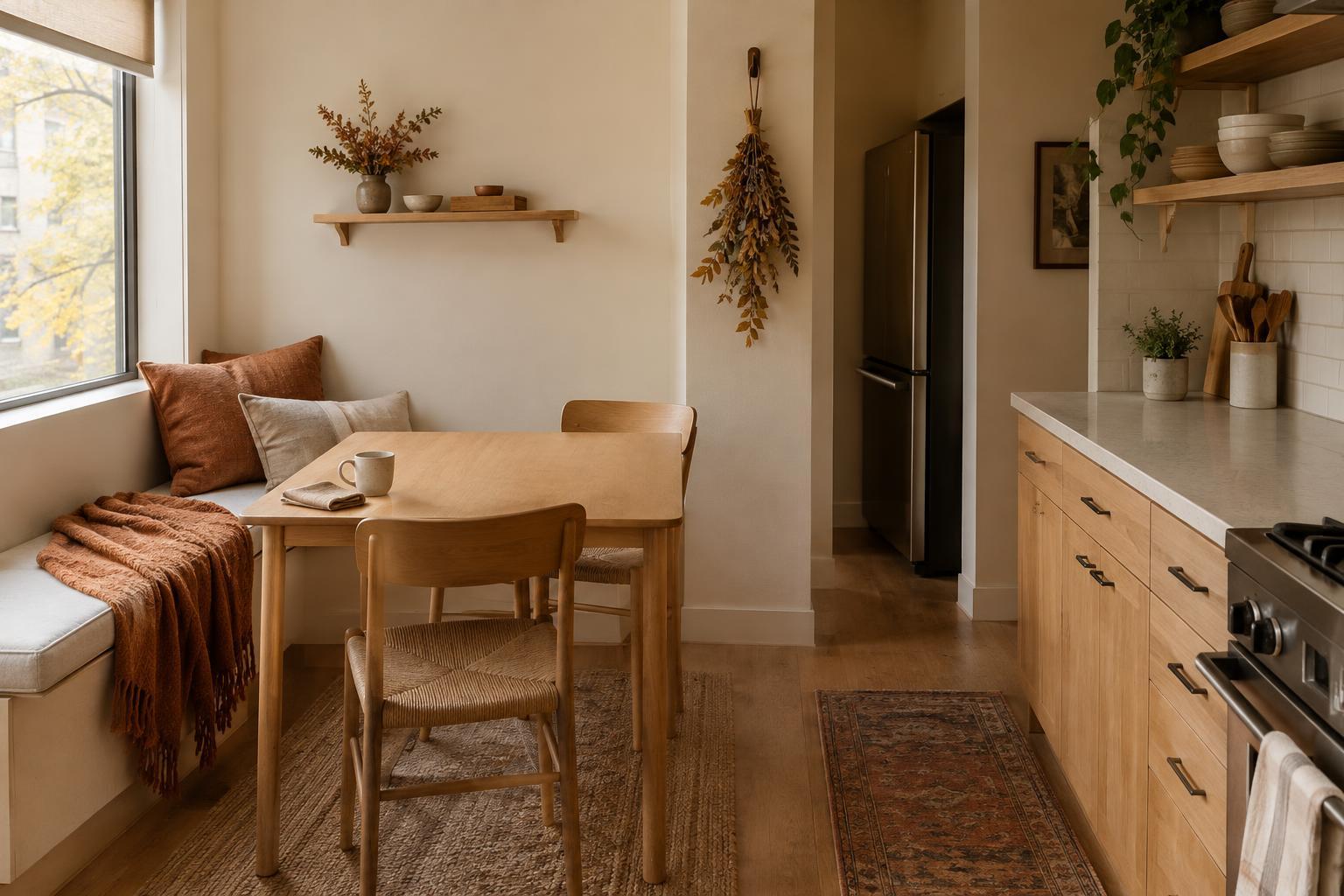
Choose two or three features to carry through your holiday decorating. You might echo the warm white of your lampshades, the green of a favorite cushion or the brass finish of your cabinet handles. Repeating familiar details makes new pieces feel connected to the room. It also gives you an easy way to decide what to leave in storage, even if you like it on its own.
Build a seasonal palette, not a new color scheme
Your holiday palette can grow out of your everyday one. If your home is mostly neutral, try adding one richer color through ribbon, candles or a table runner. If you already live with plenty of color, pick up one shade from a rug or artwork and use it in a few small places. Traditional holiday colors can work beautifully, but they are choices rather than requirements.
Varying texture often adds more interest than adding extra colors. Matte paper ornaments, soft greenery, glass, wood and a little shine can sit together when their colors relate to the room. Try arranging a few pieces in place before decorating every surface. Step back and check the view from where you usually sit or enter; what looks balanced up close may feel busy across the room.
Let everyday materials lead
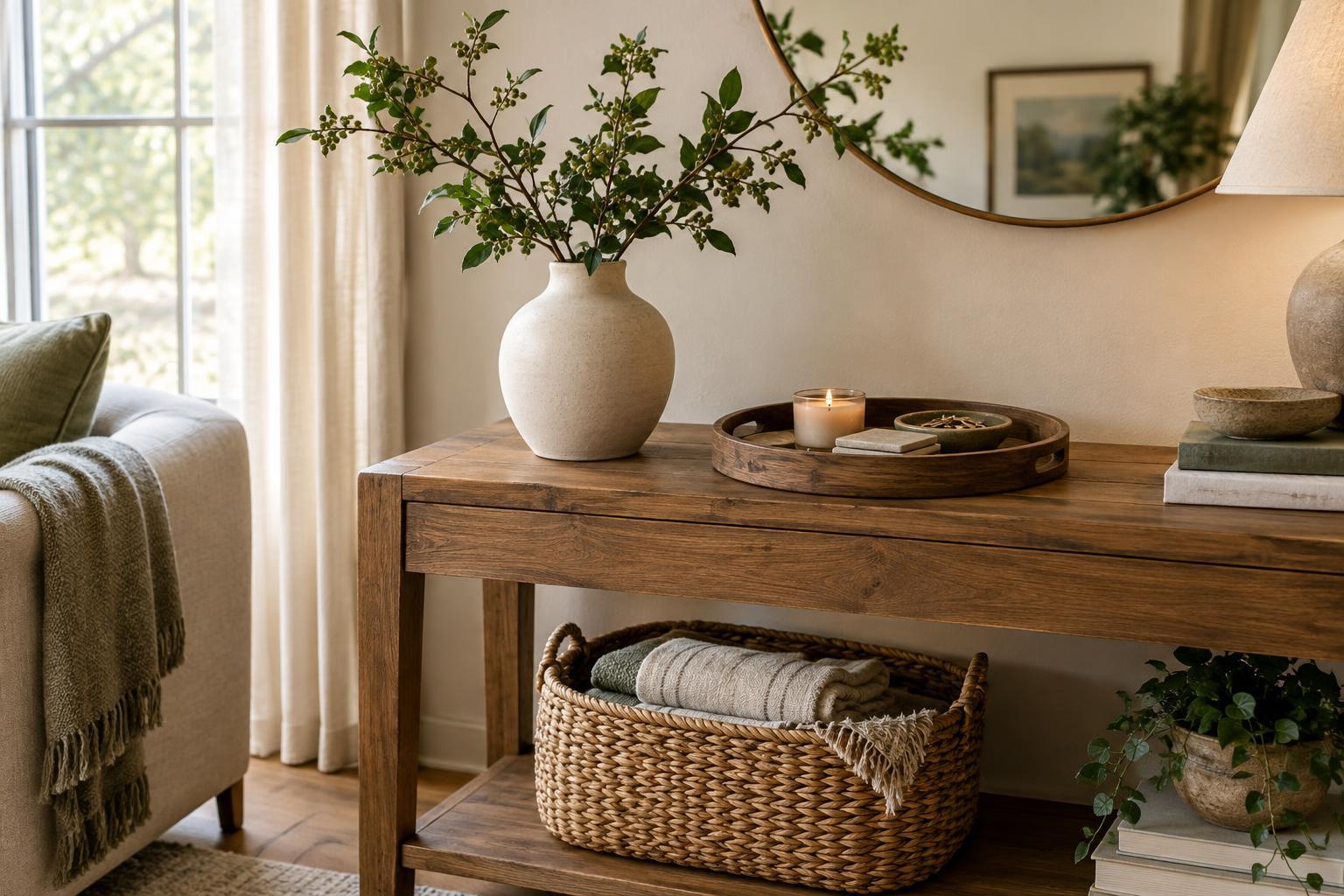
Decorations tend to settle in more comfortably when they share materials with your furnishings. In a room full of woven baskets and natural wood, a simple branch arrangement or wooden ornaments may feel at ease. In a space with glassware and smooth finishes, clear vessels and restrained metallic accents may be a better fit. You do not have to match everything exactly; a few points of connection are enough.
Textiles offer a gentle way to shift the mood. A throw in a deeper shade, a washable tablecloth or fabric napkins can make a familiar room feel ready for guests. Keep the cushions, rugs and curtains that already make the space comfortable unless there is a good reason to move them. Adding one seasonal layer is often easier to live with than replacing every soft furnishing.
Give decorations a few clear places to land
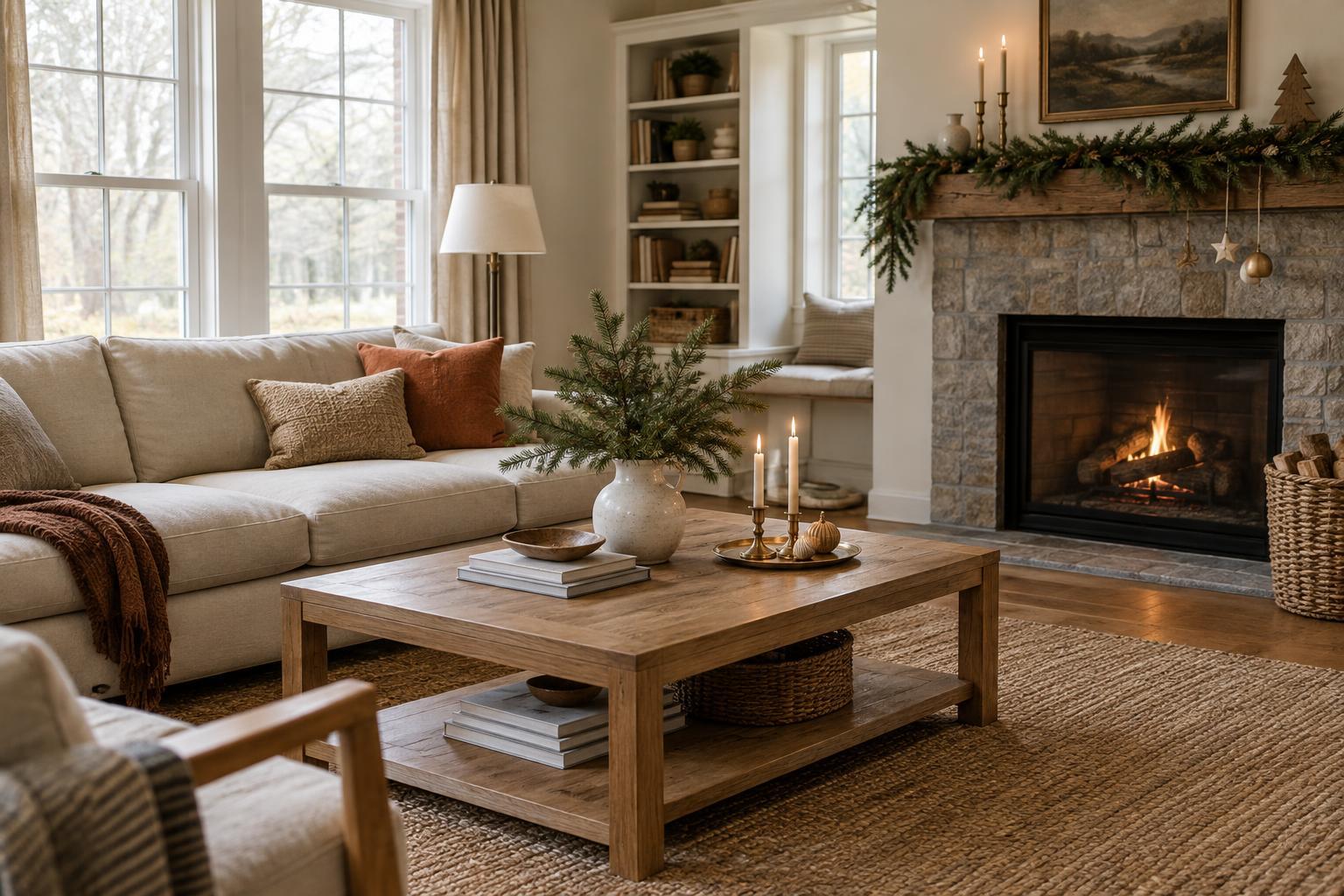
Rather than spreading small objects throughout the house, choose a handful of areas to decorate. A dining table, mantel, entry shelf or sideboard can hold a complete seasonal moment. Grouping items there makes the effect easier to notice and leaves everyday surfaces useful. It also gives each room a little breathing space.
Think about how the space works before choosing the size of an arrangement. Keep table decorations low enough for conversation, leave room for serving dishes and make sure entryway accents do not crowd keys or coats. Lighting can help set a festive tone without taking much space: a familiar lamp, a strand of decorative lights or a few candles can draw attention to your chosen area. Place lights and candles according to their safety instructions, especially near fabrics and greenery.
Edit for a style you will enjoy living with
Once everything is in place, take a short break and look again. If the room feels crowded, remove a few pieces before buying anything else. You might find that one striking centerpiece and a small echo of its color elsewhere do more than several unrelated displays. Personal ornaments and handmade pieces can still have a place; giving them a clear setting often helps them stand out.
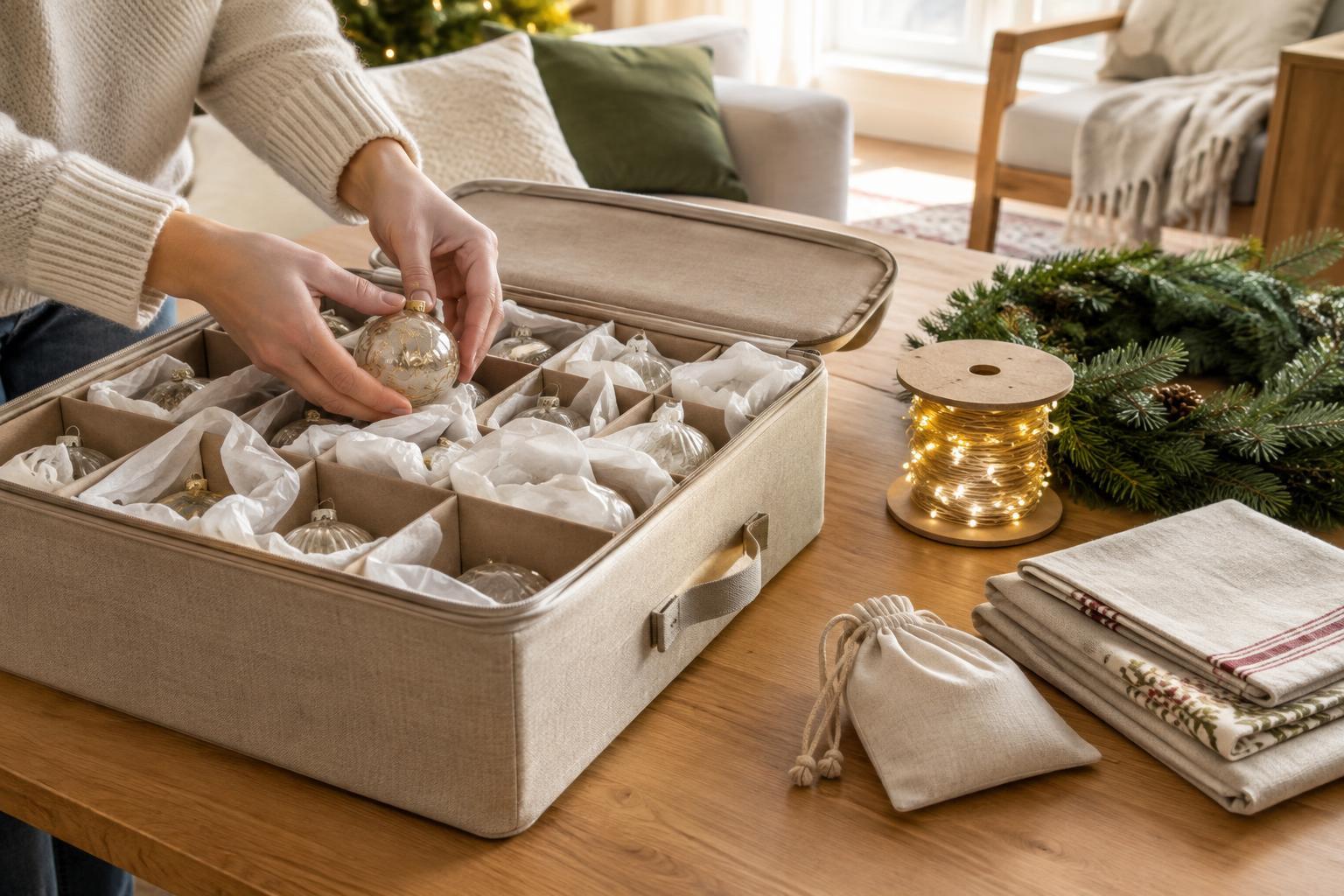
When the season ends, note which items were easy to use and which stayed in their boxes. Store versatile pieces together, such as plain candleholders, ribbons or linens that can work for other gatherings. Over time, this small habit can help you build a collection that suits both the holidays and the home you enjoy throughout the year.