Prepare for the first few minutes
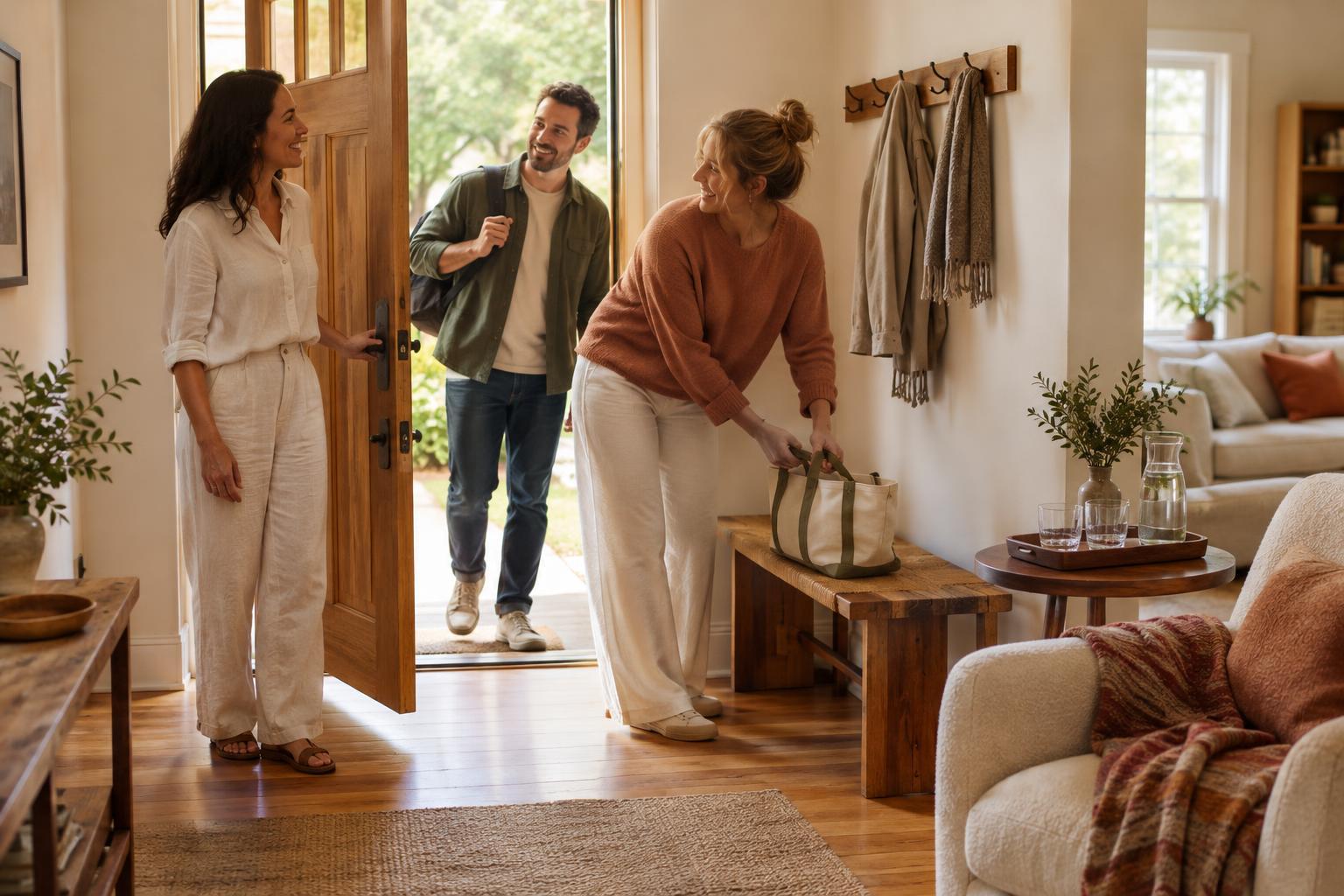
A warm welcome starts before the doorbell rings. Clear enough space near the entrance for people to step inside, put down a bag, and take off a coat without navigating a pile of shoes. Choose an obvious spot for outerwear, whether that is a row of hooks, an empty section of a rack, or a chair in a nearby room. If guests will stay overnight, leave room for their luggage where they can reach it without blocking a walkway.
Think through the path from the door to the place where everyone will gather. A lamp switched on, a tidy surface for keys, and a clear route to the bathroom make a home easier to enter. These details need not look staged. The aim is to remove small uncertainties so guests can focus on the people they came to see.
Greet people before managing the evening
When guests arrive, pause what you are doing if you can. Say hello, take their coat or show them where it goes, and introduce anyone they have not met. If you are finishing something in the kitchen, give a quick explanation rather than leaving them to wonder where to stand: “We’re gathering in the living room; I’ll join you in a minute.” A clear invitation feels more welcoming than a hurried list of apologies about unfinished preparations.
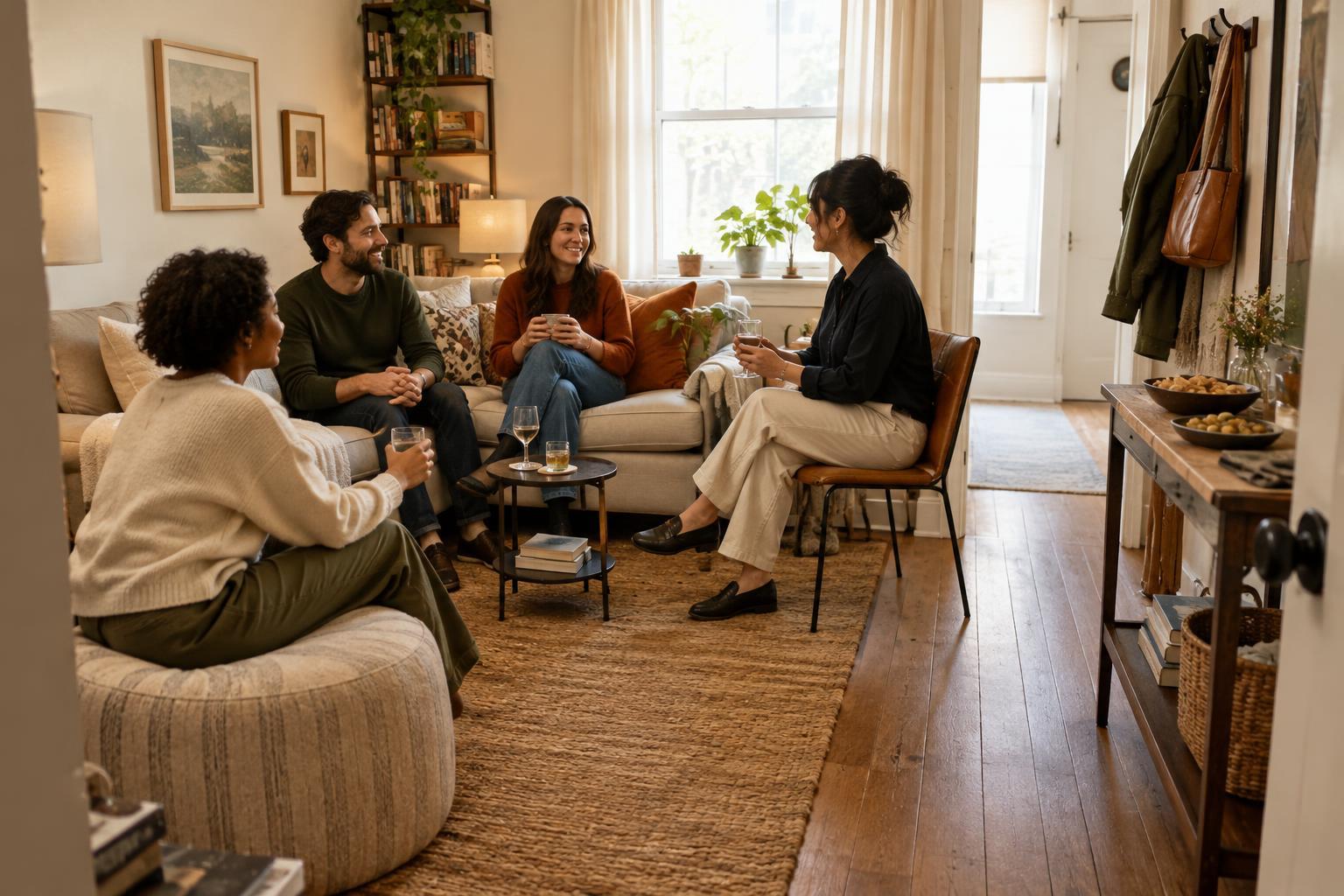
Offer a drink early, including a simple nonalcoholic choice such as water, tea, or something chilled. You do not need an elaborate selection. Point out where guests can set their glasses, especially if the seating area has few side tables. For a casual gathering, letting people know they can refill their own water can be helpful, provided the pitcher and glasses are easy to find.
Make the space comfortable and easy to use
Comfort is often about options. Leave a little space between seats so people can move around, and place a small table or tray within reach for drinks. If the room feels cool, keep a throw nearby; if it feels warm, adjust the temperature or offer a seat away from direct sunlight. Soft lighting can make a room inviting, but keep it bright enough for guests to see their food, one another, and the way to the next room.
Give essential directions naturally. Point out the bathroom, mention a step that is easy to miss, or show overnight guests where they can charge a phone. For a longer stay, explain practical household routines without making them sound like rules: when coffee is usually made, where clean towels are kept, and whether there is a preferred place to leave wet shoes. A few useful details allow guests to act independently.
Offer food without making it a test
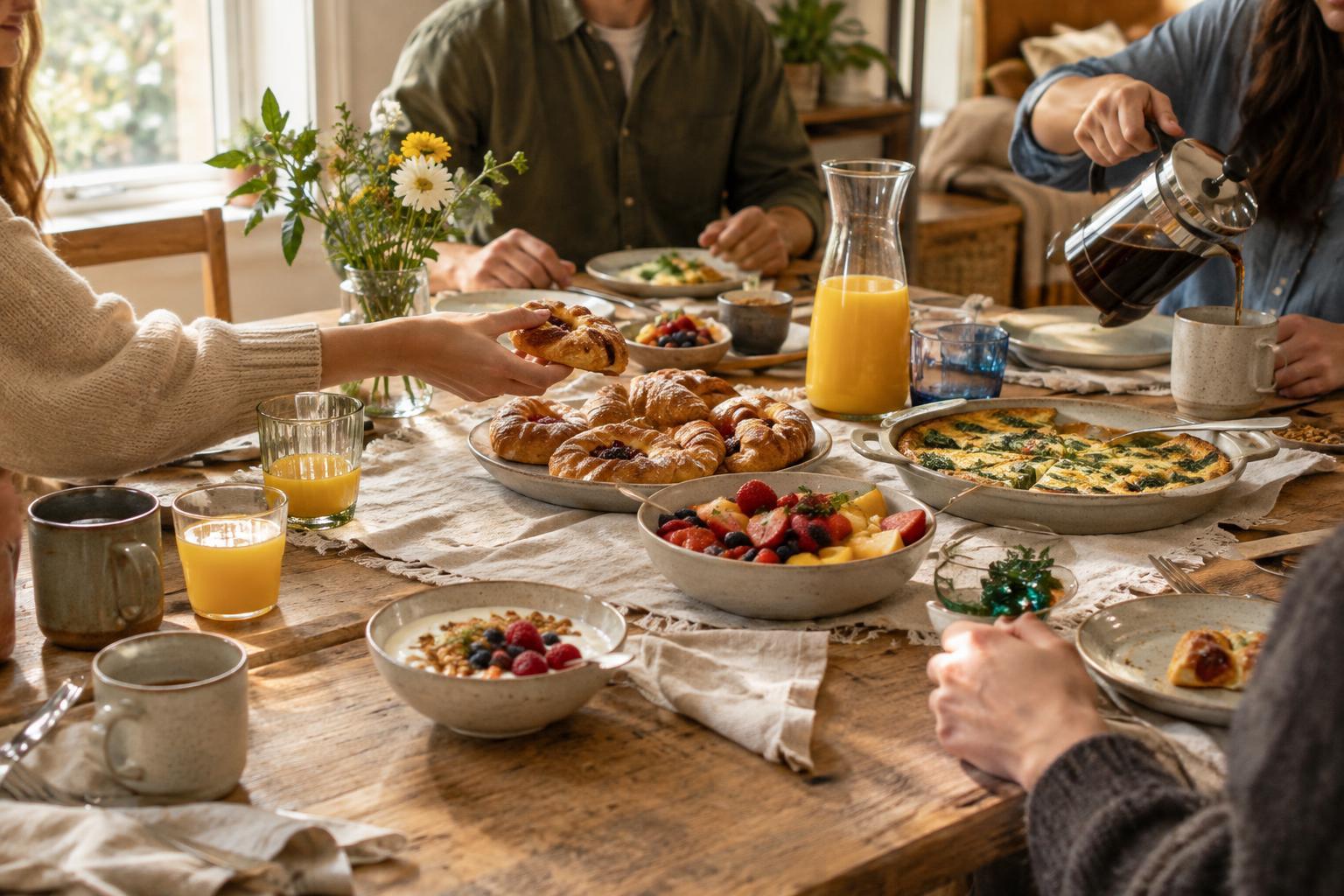
A small snack can help guests relax while a meal is being finished. Choose something that can sit out briefly and is easy to serve, such as fruit, crackers, or a simple dip. Put out napkins and a place for used plates at the same time. This reduces the need for guests to interrupt a conversation to ask what to do with things.
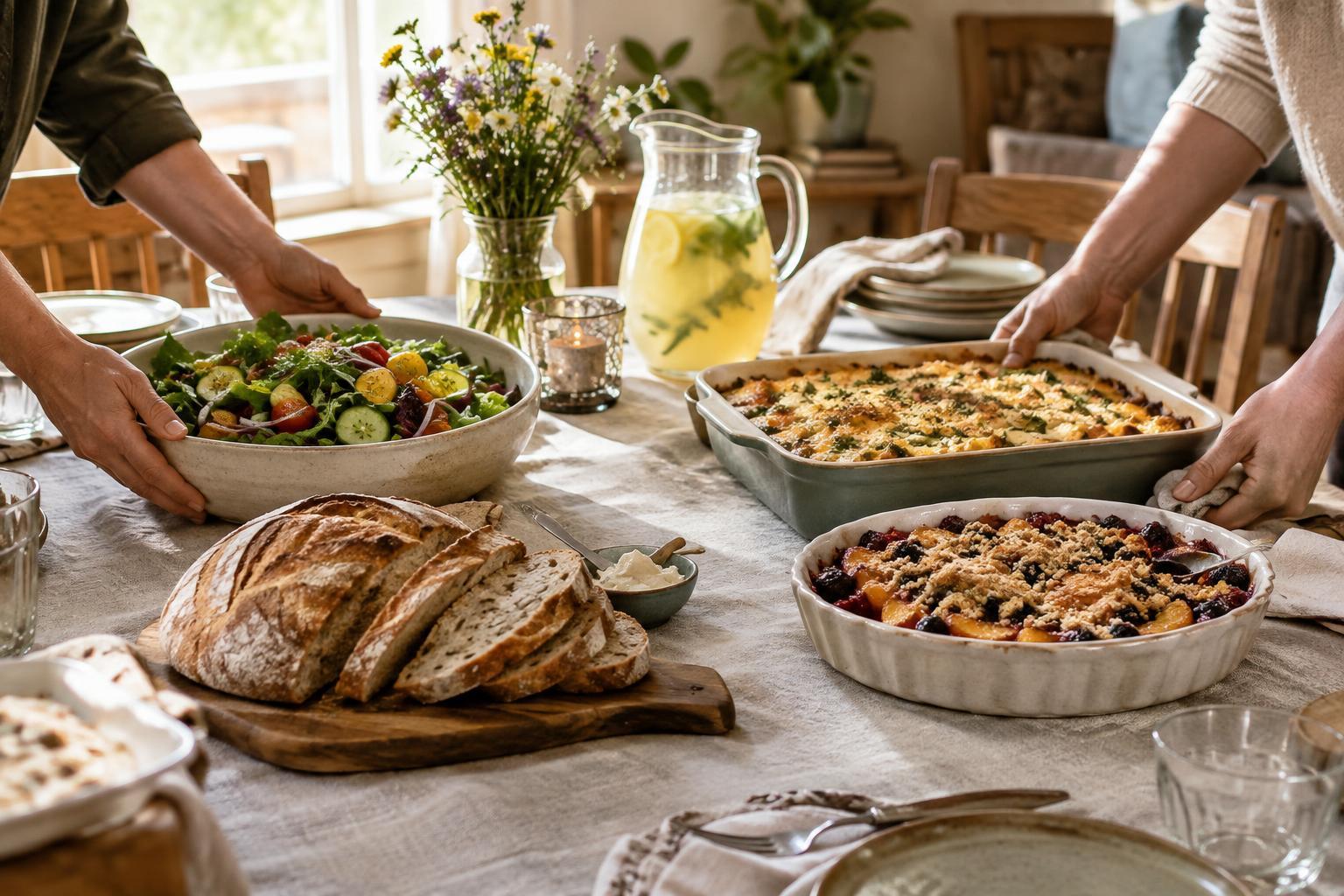
If you are serving a meal, let people know roughly when it will be ready and ask about food needs ahead of time when possible. At the table, explain anything unfamiliar in a straightforward way, then let guests choose what and how much they want. An offer of seconds is kind; repeated urging can make someone feel observed. The same principle applies to drinks and dessert: make them available, but leave room for an easy no.
Leave room for guests to settle at their own pace
Not everyone settles in by talking immediately. Some guests like to help with a small task; others would rather sit and listen for a while. You can offer a specific, optional job, such as carrying a bowl to the table, without making anyone feel obliged. In a group, introduce people with a little context they can build on, then let the conversation find its own direction.
As the visit continues, notice practical needs without constantly checking on everyone. Refresh the water, make space when someone stands up, and allow a quiet moment between activities. For overnight guests, a brief check-in about the morning plan can prevent awkward guessing later. A good welcome is not a perfect performance. It is a series of clear, considerate gestures that give people permission to feel comfortable in your home.