Plan for movement, not just seats
A comfortable gathering needs more than enough chairs. Guests also need to reach the door, get a drink and step away from a conversation without asking everyone to move. Before inviting people, walk through the space as they will use it: enter with a coat, find somewhere to put it, pick up a plate and reach a seat. Notice any tight turns or furniture that makes the route awkward.
Choose a guest list that suits the room and the kind of gathering. A seated meal asks for a place at the table for everyone, while a casual visit can make better use of a sofa, a few chairs and short periods of standing. If you are unsure how many people will feel comfortable, invite fewer. Conversation tends to flow more easily when guests can move without brushing past one another.
Keep the main route open, especially between the entrance, refreshments and bathroom. Moving one side table or floor lamp for an evening may do more than a complete rearrangement. Put anything you remove somewhere out of the way rather than filling another part of the room with obstacles.
Give essentials a clear place
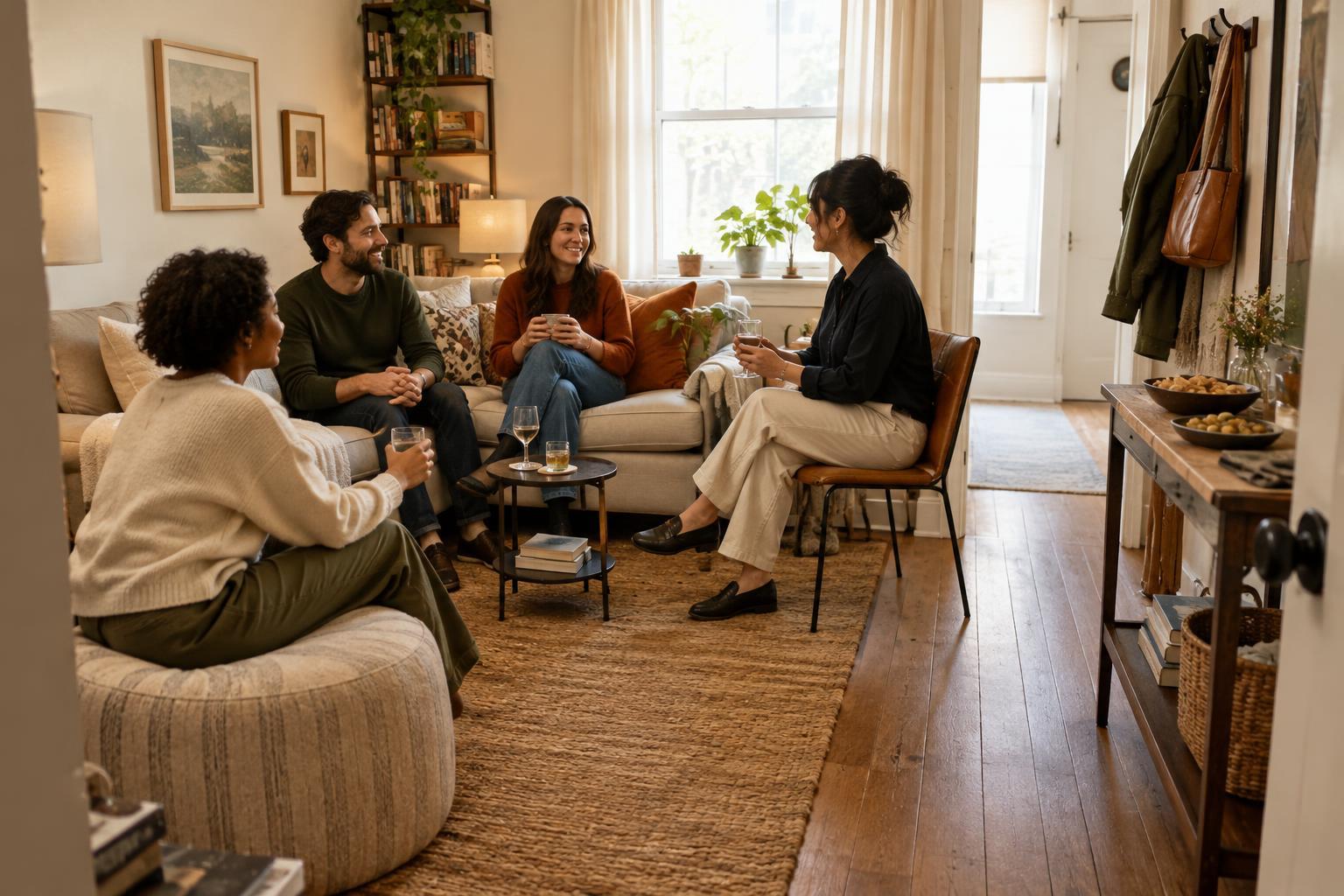
In a small home, guests feel at ease when they do not have to ask where everything goes. Make an obvious spot for coats and bags, whether that is a cleared set of hooks, a bedroom bed or a sturdy chair away from the gathering. Leave a little space near the entrance so arrivals can take off layers without blocking the door. If shoes are coming off, provide a place to leave them that does not interrupt the walkway.
The same principle applies to drinks and dishes. Set out coasters or a stable tray near the seating area, and leave a small surface free for a guest who wants to put down a glass. A table need not be empty to be useful, but delicate decorations, loose papers and crowded stacks can make it hard to use comfortably. Clear only what competes with the gathering; familiar books, textiles and personal objects can still make the room feel like home.
Check the bathroom before guests arrive. A clear sink edge, hand towel and easy-to-find supplies help people look after themselves without calling for the host. These small preparations reduce interruptions and free you to enjoy the visit.
Serve food where it will not create a bottleneck
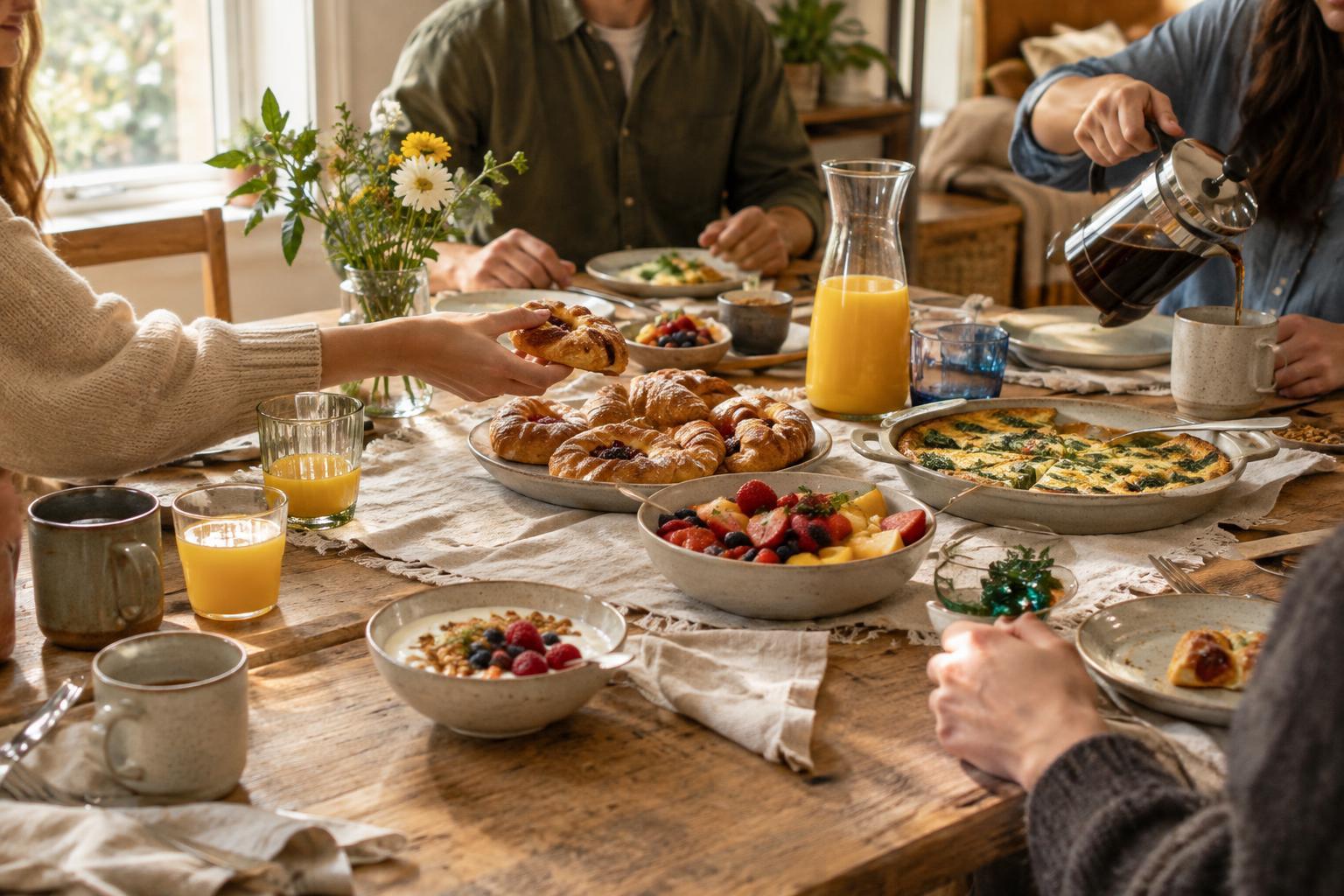
One crowded serving point can make an otherwise open room feel cramped. If possible, separate drinks from food so guests are not all gathering in the same corner. Keep both away from a narrow doorway. For a casual evening, offer food that is easy to carry on one plate and eat from a chair; complicated dishes may require more table space than the home can comfortably provide.
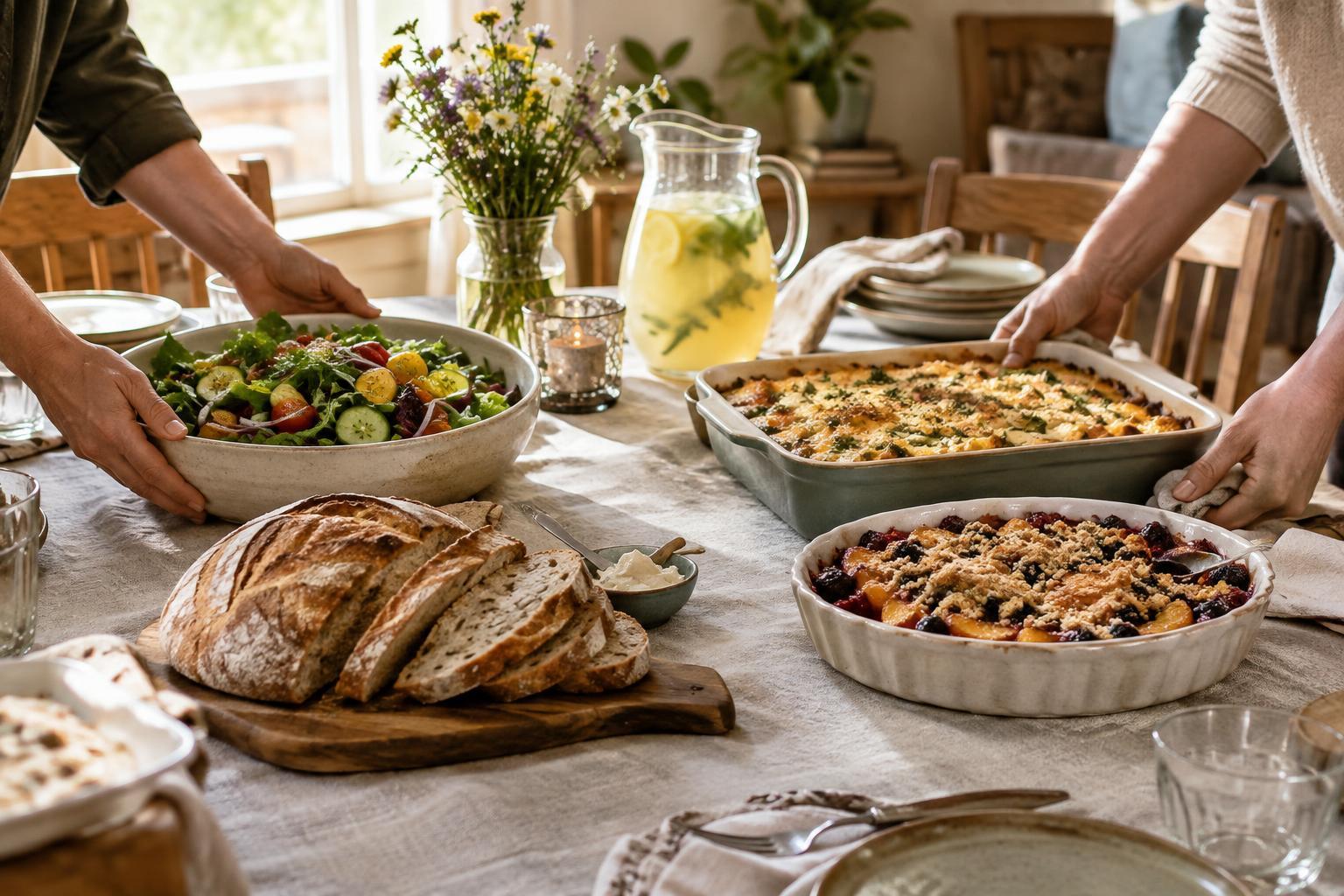
Serve in stages rather than putting every bowl and platter out at once. You might begin with a small snack, clear it, then bring out the main food. This keeps usable surfaces available and gives you less to manage if the room is compact. Before guests arrive, decide where used plates and glasses will go. A designated counter area or tray prevents them from accumulating beside people who are still eating.
Keep the menu manageable for you as well. Food that can be prepared ahead lets you stay with guests instead of repeatedly squeezing through the room carrying hot dishes. You can still make a simple meal feel considered with a shared serving bowl, cloth napkins or a favorite platter.
Make flexible seating feel intentional
Pull seating into a loose conversation area rather than lining every available chair against the walls. Guests should be able to hear one another without leaning across the room. Dining chairs can join the sofa, while a firm ottoman may work as an extra seat if it is comfortable and stable. Place lower seats where someone can still take part in the conversation, not behind a taller chair.
Leave people some choice. Not everyone wants to sit close together, and someone may prefer a chair with a back to a floor cushion. If there are more guests than fixed seats, a shorter, more informal visit may suit the space better than a long dinner. You can also welcome people in smaller groups on different days rather than trying to fit every friend into one evening.
Finally, pay attention to the room once guests arrive. Open up a little space if coats pile up, move an unused chair if it blocks the route, or shift a tray within easier reach. A small home does not have to look perfectly arranged throughout the gathering. It only needs to remain easy to use and pleasant to share.