Give guests an easy place to begin
When guests don’t know one another, the first few minutes can ask a lot of them. They may be learning names, finding a place to put a coat and wondering whether to join a conversation already underway. A warm welcome helps with all three. Greet each person, offer a drink or a place to settle, and introduce them to someone before you step away.
Make introductions more useful than a name exchange. Instead of saying only, “This is Maya,” add a small, comfortable point of connection: “Maya has been trying new bread recipes, and you were just telling me about your favorite bakery.” Choose details guests would be happy to discuss, not personal information they might prefer to keep private. The aim is to open a door, not assign two strangers a topic for the evening.
Let the room do some of the work
Conversation is easier when people can move and join in without interrupting a tight circle. If space allows, arrange seats so guests can see one another, with a few smaller places to talk rather than one long row facing the same direction. Keep a clear route between the door, drinks and food so arrivals can ease into the room naturally.
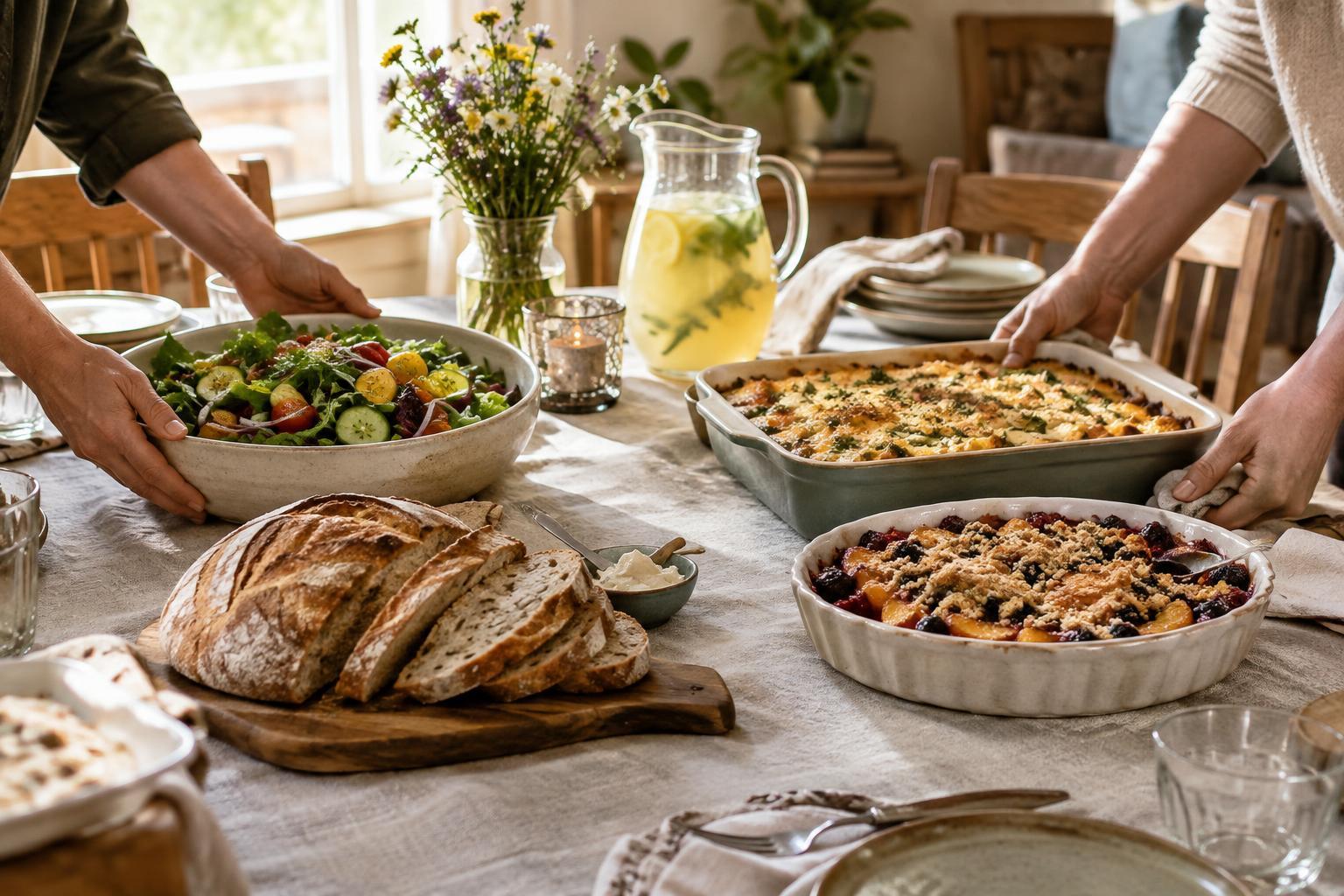
A simple shared activity can also take the pressure off small talk. Let guests build a plate from a snack board, choose a topping for a dish or help carry something to the table. Keep the invitation optional: some people enjoy having a small task, while others would rather settle in first. The activity gives people something immediate to notice and talk about without making the gathering feel like an organized game.
Comfort matters, too. Check that the music allows people to hear one another and that there is somewhere to set down a glass. These small choices make it easier to turn toward a new person, join a group or step into a quieter conversation.
Ask questions that invite stories
The best opening questions are easy to answer in more than one way. “How do you know Sam?” can work if there is a shared host, but it may lead to a short answer. Try following it with something more open: “What have you been enjoying lately?” or “Have you made anything good recently?” Questions about food, home projects, books or local places offer several paths without asking guests to disclose more than they want to.
Follow the answer rather than moving through a mental list of prompts. If someone mentions a weekend walk, ask what they liked about the route. If another guest has a related thought, make room for it: “That reminds me of what you were saying earlier.” Listening closely gives you better ways to connect people than searching for a clever question.
Not every pause needs rescuing. Guests may be taking a sip, considering an answer or simply enjoying a quiet moment. If you do want to shift the conversation, introduce a light subject that several people can enter, such as a favorite meal to make for friends. Avoid calling attention to the silence; a gentle new question is enough.
Help groups mix without forcing it
As the gathering continues, notice whether someone is standing alone or whether one group has become difficult to enter. You can draw a guest in with a brief invitation: “We’re talking about easy weeknight dinners. Do you have one you rely on?” If they seem content observing, let them be. Being a good host means offering a way in, not requiring everyone to talk at the same pace.
If a conversation becomes dominated by one person, redirect with warmth rather than correction. Ask another guest for their experience, or introduce a related subject: “I’m curious what everyone else thinks.” At dinner, you can help by speaking to people on either side of you and occasionally bringing a question to the wider table. This makes room for quieter voices without putting a single guest on display.
Aim for ease, not constant chatter
A successful evening does not require every guest to meet everyone else or every conversation to last. People may connect in pairs, drift between groups or spend a few minutes quietly enjoying their food. Give the gathering a comfortable rhythm by making it clear when food is ready, refilling a shared dish or inviting people to move to the table.
Your own manner sets a useful tone. When you appear comfortable with a brief pause or an imperfect introduction, guests are more likely to relax as well. Prepare a few ways to bring people together, then give them room to find their own conversations. Often, the most welcoming thing a host can do is make connection possible without trying to manage every word.