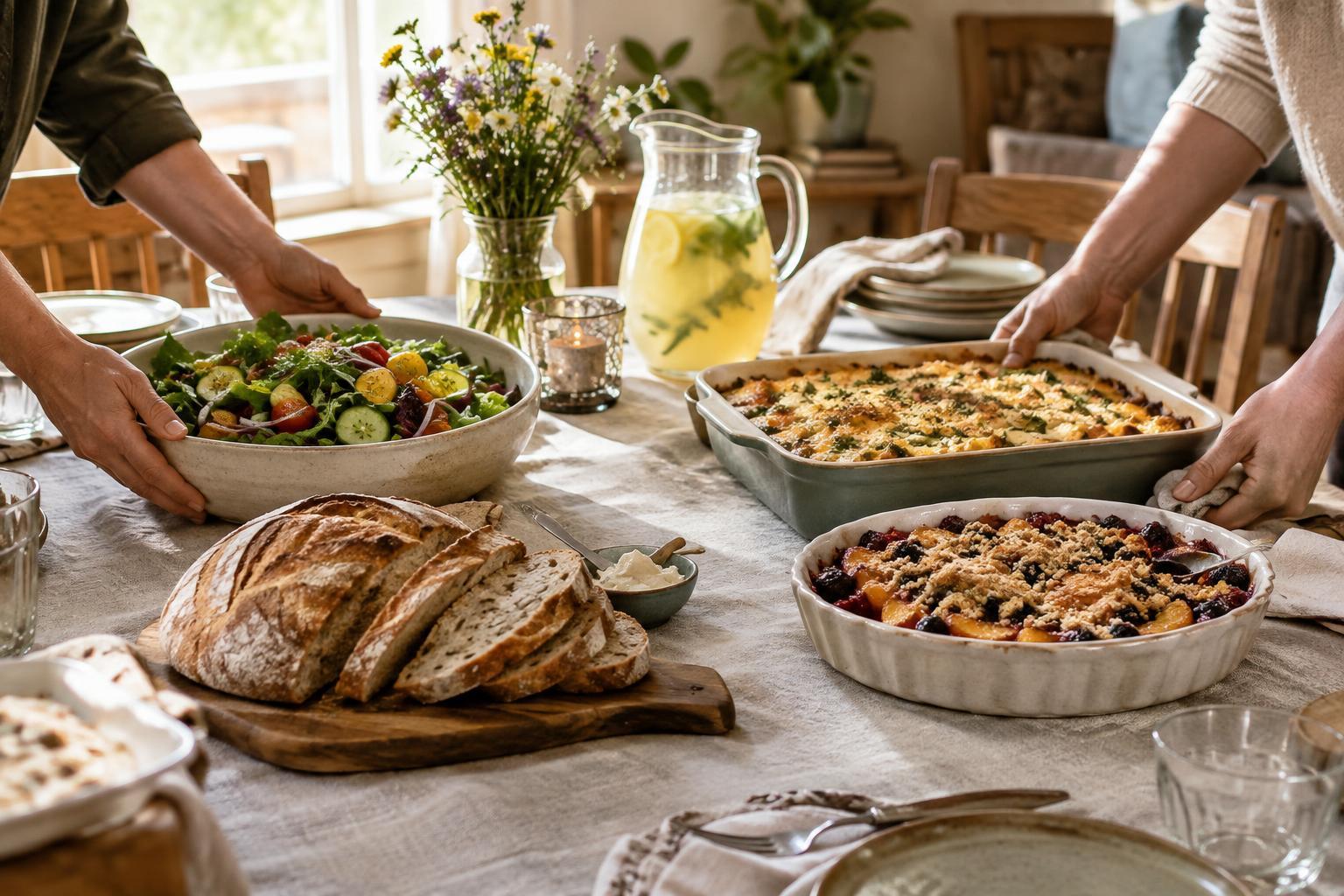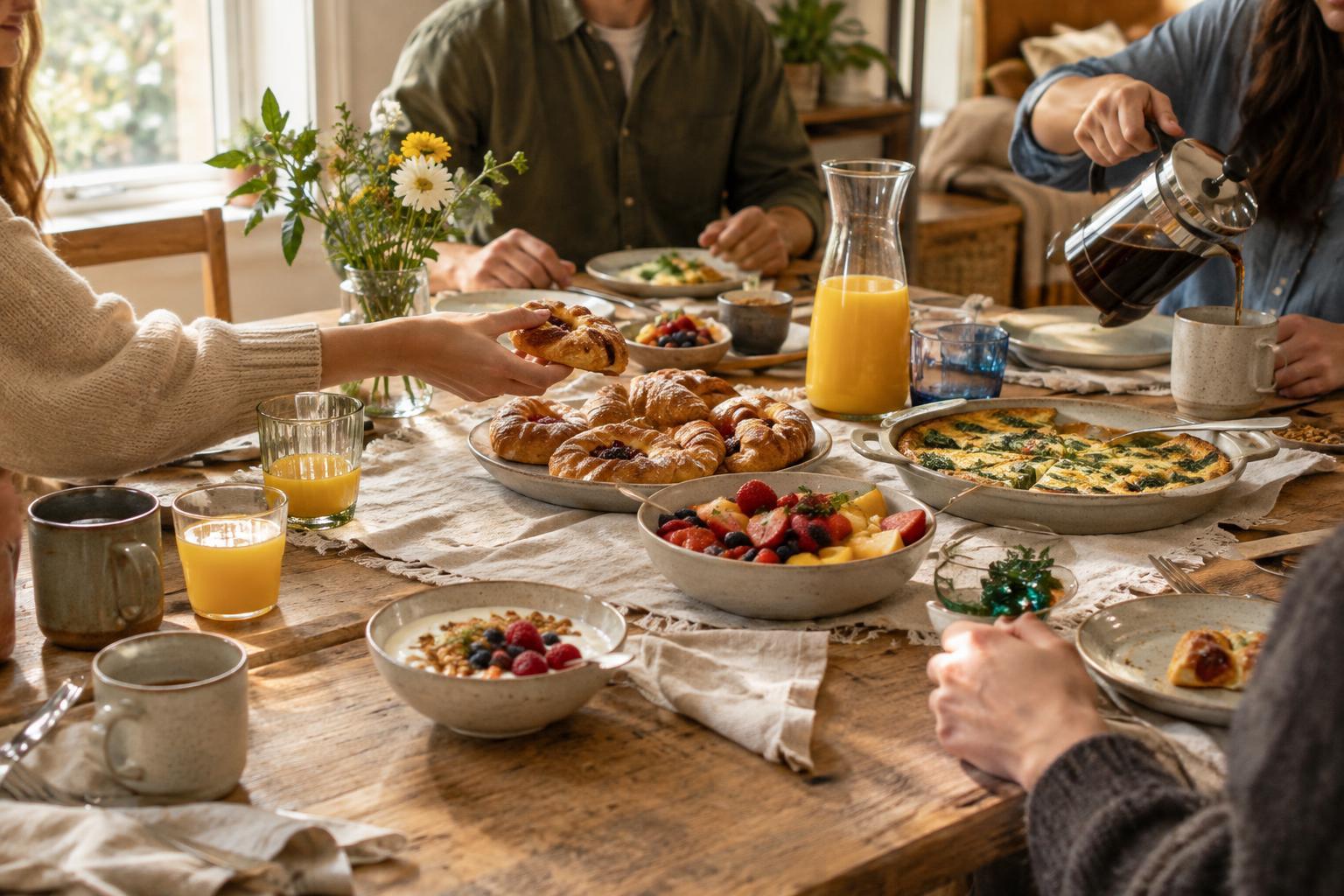
Start with the kind of morning you want
Before choosing recipes, decide what would make the gathering feel comfortable for you. A low-effort brunch might mean everyone sitting around one table, or it might mean friends drifting between the kitchen and living room with a plate in hand. Choose a start time that gives you room to wake up, put out the food and make a drink without rushing. A casual invitation can say that brunch will be relaxed and self-serve, so guests know what to expect.
Keep the guest list and menu in proportion to your space and energy. You do not need a separate dish for every preference, but it is thoughtful to ask about dietary needs when inviting people. Then choose foods that can be assembled in more than one way. Bread, fruit and a few toppings, for example, give guests options without requiring you to cook several different meals.
Build a small, flexible menu
A useful brunch formula is one substantial dish, one fresh element, something baked or toasted, and drinks. The main dish could be a tray of baked eggs, a vegetable frittata or a platter of sandwiches. Add a bowl of fruit or a simple salad, then put out toast, pastries or muffins. This is enough variety to make the table feel generous without filling the kitchen with half-finished recipes.
Favor food that tastes good at room temperature or needs only a quick finish before serving. If you want one hot dish, let it be the only item that depends on the oven at the last minute. Store-bought bread or pastries are a sensible shortcut; you can make them feel considered by serving them on a board with butter, jam or sliced fruit. Put any spreads or toppings in bowls you already own rather than buying pieces for one occasion.
For drinks, keep the choices clear: water, coffee or tea, and perhaps juice. Set out cups, glasses and a jug of water where people can find them. If guests can refill their own drinks, you will spend less of the meal stepping away from conversation.
Do the quiet work the day before
The easiest hosting morning begins with a short plan. Write down what you will serve, what needs to be chilled, and what must happen just before guests arrive. Shop with that plan in mind, then check that you have enough plates, cups, cutlery and serving utensils. They do not have to match. A mix of everyday pieces often suits a friendly brunch better than a table you feel obliged to keep perfect.
The day before, wash fruit, prepare any components that will keep well, and clear space in the fridge for dishes and drinks. Set out serving platters with a note or utensil for each item, so you are not looking for a suitable bowl while food is ready. If you are making a baked dish, do the prep that the recipe safely allows ahead of time and leave yourself only the final cooking step. Keep perishable foods stored appropriately until they are needed.
Set a table that invites people to settle in
A welcoming table needs less decoration than it does space for plates and shared food. Start with a clean surface, then add a tablecloth or runner if you have one. Cloth napkins can bring softness and color, but ordinary napkins work just as well. Use a low arrangement of flowers, greenery or a small bowl of citrus if you want a centerpiece; keep it below eye level so friends can talk across the table.
Think about movement as you place things. Put food near the plates and keep drinks on a separate counter or side table if space is tight. Leave somewhere for guests to set down a cup while serving themselves. A small empty dish for used tea bags, fruit peels or wrappers can prevent clutter from spreading. These practical details do more for a relaxed atmosphere than an elaborate display.
Make room to be a guest at your own brunch
On the morning, give yourself a simple order of tasks: finish the hot dish, bring out the cold food, fill the water jug, and put on coffee or tea. Ask an early guest to carry a platter or pour drinks if they offer. Once everyone has arrived, explain briefly what is on the table and let them serve themselves. You can replenish food as needed without monitoring every plate.
A low-effort brunch is not one where nothing takes work; it is one where the work is chosen carefully. A short menu, familiar serving pieces and a little preparation give you time to sit down, eat and enjoy your friends. If a dish finishes later than planned or the table gets crowded, the gathering can still be exactly what you hoped for: an easy morning together.