Start with the kind of evening you want
Before choosing recipes, picture how you want guests to spend their time. A sit-down dinner calls for dishes that can reach the table together. A casual evening may work better with food people can serve themselves. Either way, the most useful question is not “What would impress everyone?” but “What can I prepare while still enjoying their company?”
Keep the menu short: one main dish, one substantial side, something fresh or crisp, and an optional dessert. That gives the meal contrast without creating several competing tasks. If you know about guests’ dietary needs, choose a main that suits the group or make sure the sides form a satisfying alternative. Check ingredients when needed rather than assuming a dish will work for everyone.
Choose a main dish that benefits from waiting
A good make-ahead main is complete, easy to portion, and forgiving about its exact serving time. A baked pasta, bean stew, vegetable tart, or braised dish can be prepared in stages and served without delicate finishing work. Choose something you have made before, if possible. Hosting is easier when you already know which pan it needs, how much it makes, and what it looks like when ready.
Think through its final steps before committing. Will it need the oven just as guests arrive? Does it need to be reheated, or can it be served at room temperature? A dish that requires only one clear task on the day is usually more helpful than a supposedly simple recipe with five last-minute garnishes. Follow the recipe’s storage and reheating directions, and keep perishable food appropriately chilled until it is time to serve.
Add sides with different jobs
Let each side contribute something distinct. If the main is rich and soft, add a crunchy salad with a bright dressing. If the main is light, offer bread, grains, or roasted vegetables to make the meal more filling. Repeating the same texture across every dish can make even a generous table feel flat; a few contrasts in temperature, color, and bite do more than extra recipes.
Favor sides you can prepare in parts. Wash and dry greens, mix a dressing, and store them separately so the salad stays crisp. Cook grains ahead, then add herbs or a squeeze of citrus before serving. Put bread in a basket rather than turning it into another cooking project. For dessert, consider fruit with yogurt, a simple cake, or a store-bought option served on a favorite plate. There is no requirement that every course be homemade.
Work backward from serving time
Write a brief plan with three columns: what can be done a day ahead, what can be done earlier on the day, and what must happen just before eating. The first column might include making the main, preparing dessert, and mixing dressing. The second might cover setting the table, arranging serving dishes, and chopping sturdy vegetables. Save the final column for reheating, dressing a salad, and putting food out.
Check for bottlenecks as you plan. Two dishes that need different oven temperatures at the same time will make the last hour harder. So will a main that needs your full attention while guests arrive. If the schedule feels crowded, change a side to one served cold or at room temperature. Leave a little space in the plan for ordinary delays; the goal is a meal that can bend, not a timetable everyone has to follow.
Set up for an easy finish
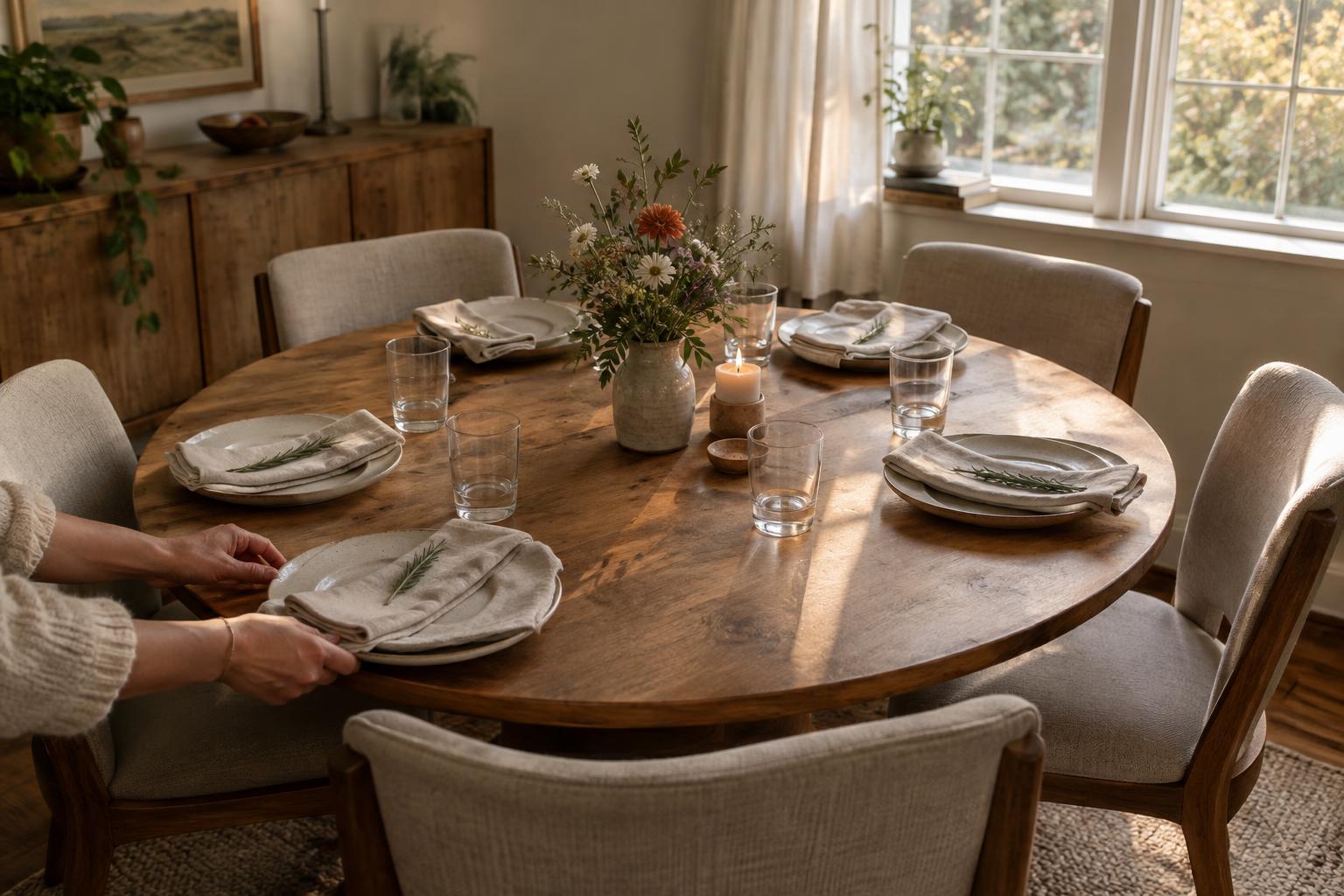
Before guests arrive, decide where each dish will go and place the serving spoon or tongs beside it. Clear space for drinks away from the busiest part of the kitchen. A jug of water and a few glasses on a side table let people help themselves while you finish the meal. Reusable napkins, everyday plates, and a small bowl for scraps or used utensils can keep the setup practical without making it feel bare.
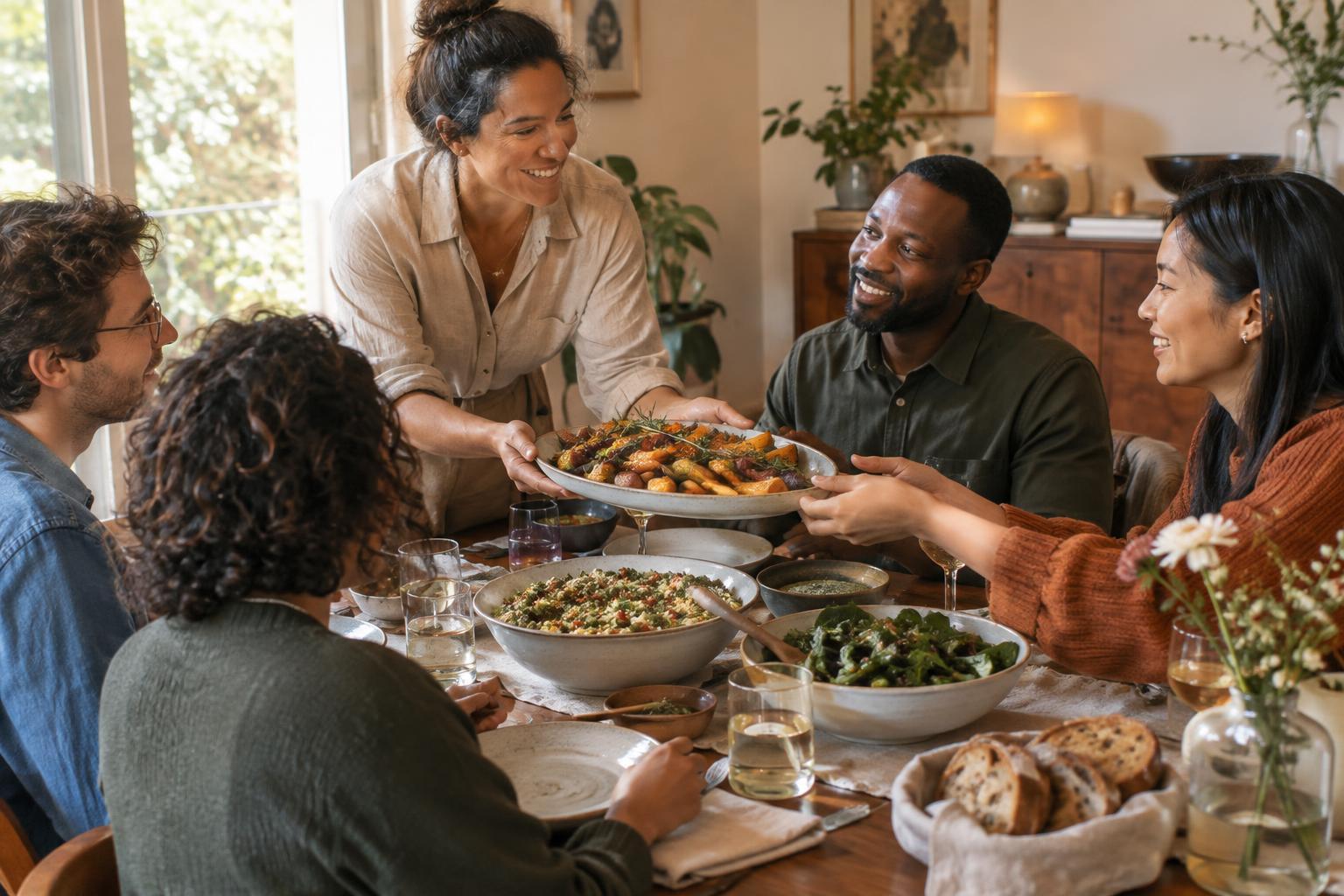
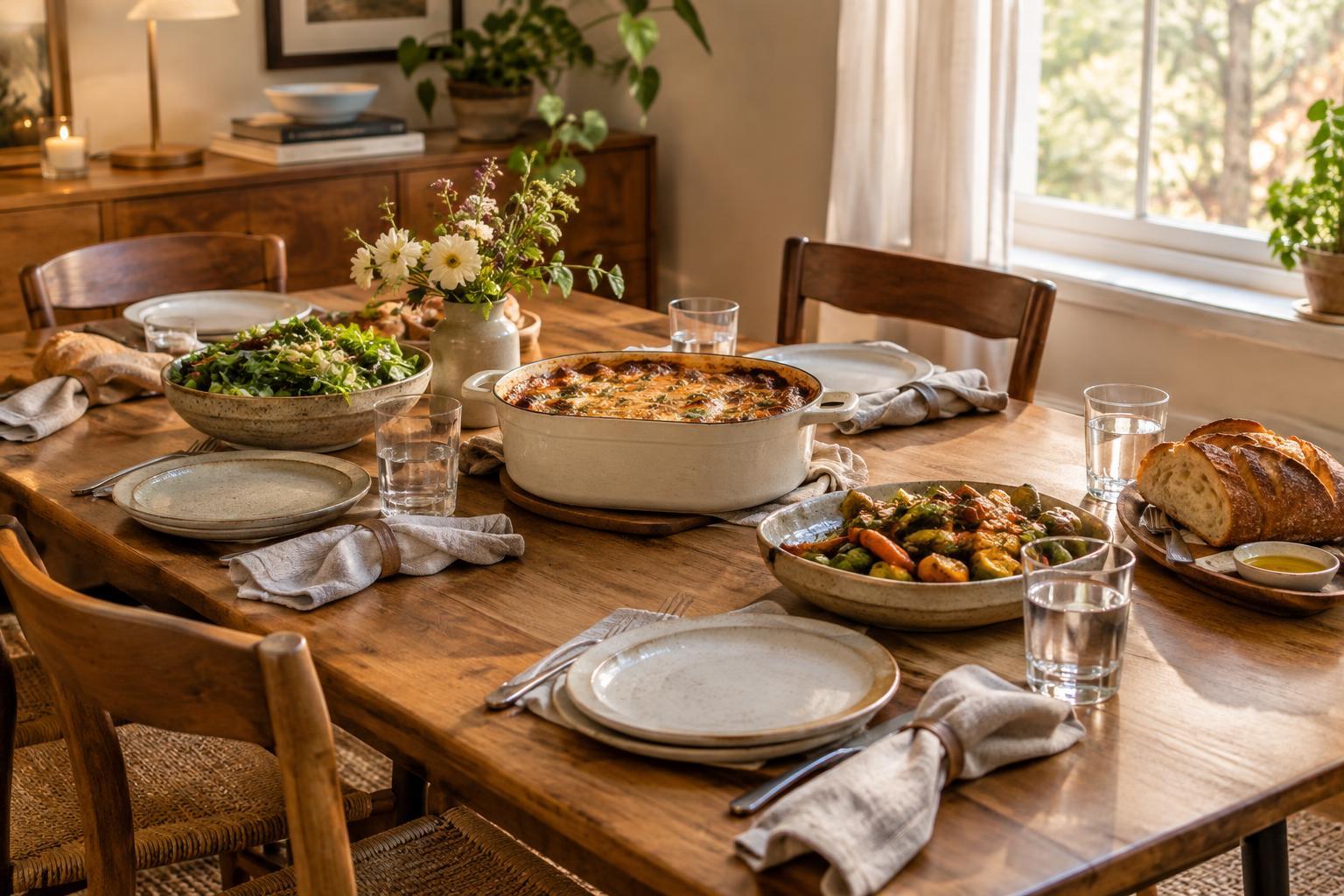
When it is time to eat, bring out the food in generous serving dishes and let the menu speak for itself. A make-ahead meal may not have the drama of something cooked to order, but it offers something more useful: a host who can sit down. If one side is simpler than planned or dessert comes straight from its box, the gathering can still feel warm. The point of preparing ahead is to make room for the people at the table.