Decide what kind of evening you want
A good first dinner party begins with a small plan, not a long checklist. Invite a number of people you can seat comfortably, and think about how you would like the evening to feel. A weeknight supper might call for one main dish and a shared salad; a leisurely weekend meal may leave room for an appetizer or dessert. Neither needs to be formal to feel thoughtful.
When you invite people, share the start time, whether you are serving a full meal, and anything useful about finding your home. Ask about food needs early enough to plan around them. You do not have to build a separate menu for every preference, but knowing what guests can eat helps you choose dishes everyone can enjoy together. If a guest offers to bring something, it is fine to suggest bread, a drink, or fruit.
Choose a menu that lets you sit down
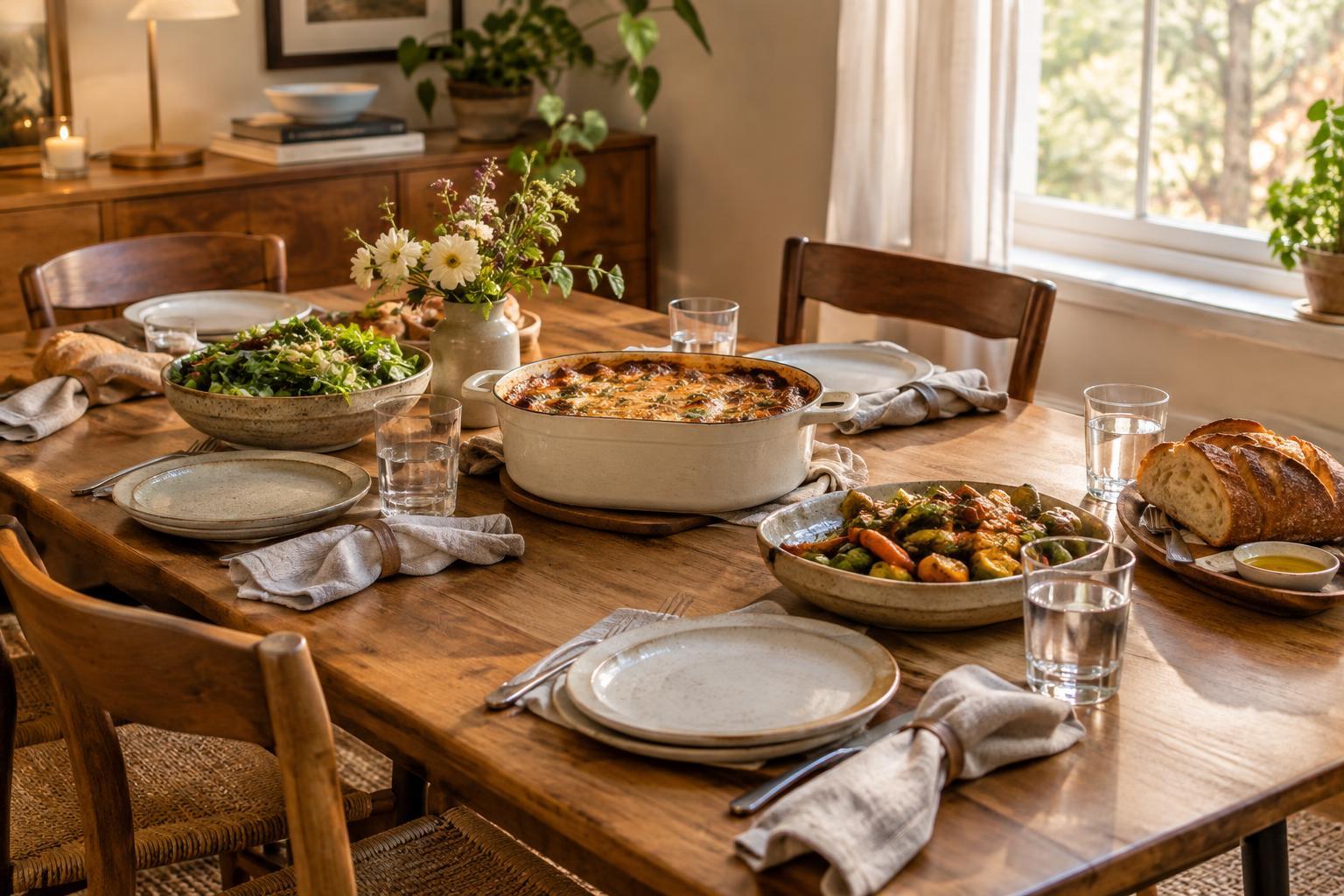
For a first dinner, choose familiar food over an ambitious new recipe. A useful menu has one main dish you can largely prepare before guests arrive, a simple side, and something easy to finish the meal. A baked pasta with a green salad, or a pot of stew with bread, keeps last-minute cooking to a minimum. Dessert can be as straightforward as ice cream with sliced fruit.
Work backward from serving time. Note what can be washed, chopped, cooked, or set out earlier in the day, then leave a short list of tasks for the final half hour. Check that you have enough oven space and serving dishes before committing to several hot items. If everything needs attention at once, simplify: one dish served at room temperature can make the whole meal easier.
Plan drinks with the same light touch. Put out water where guests can help themselves and have at least one non-alcoholic option available. A pitcher, a few clean glasses, and an open space on a counter are more useful than a complicated drinks station.
Set a table that works for the meal
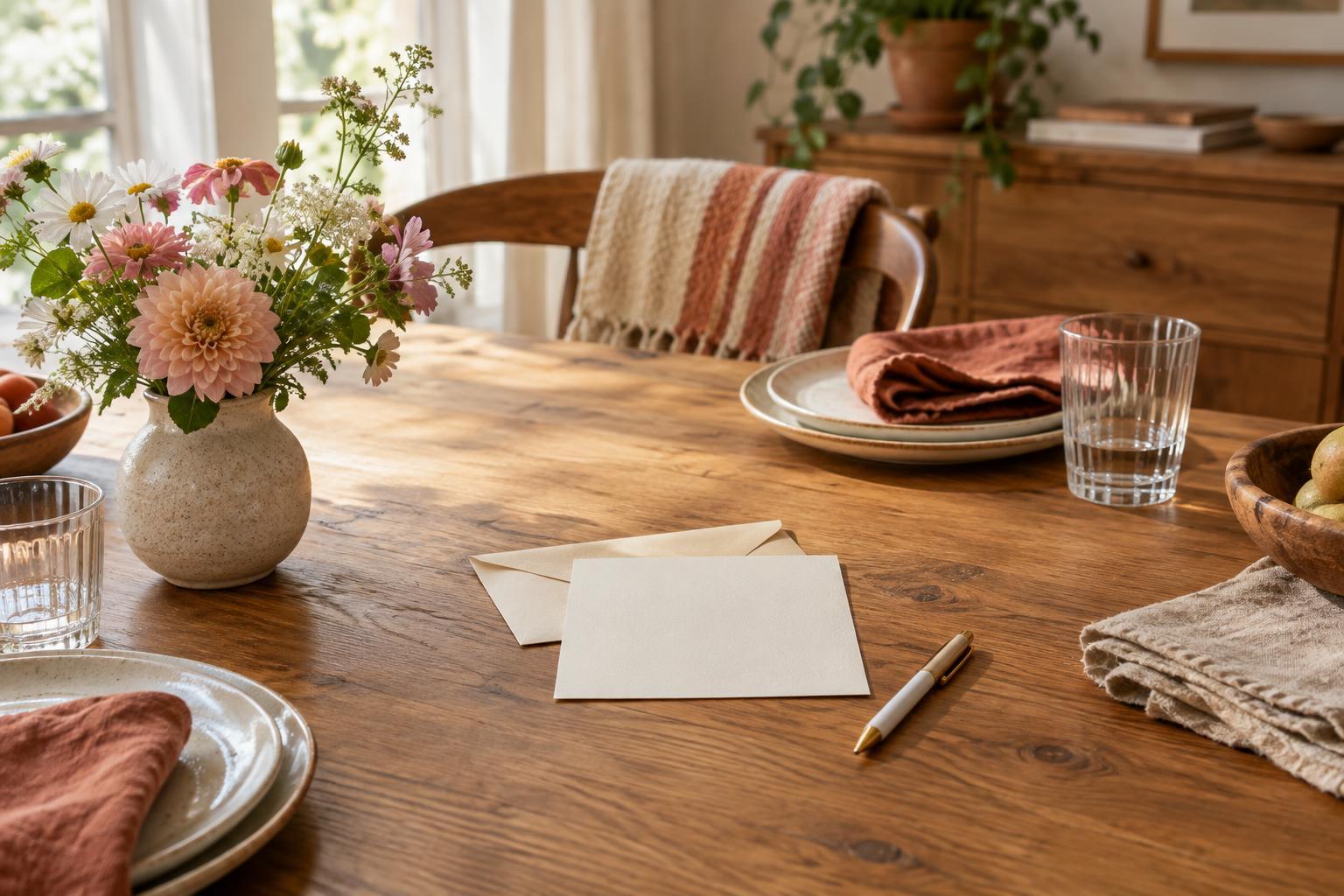
A welcoming table is comfortable before it is decorative. Give each person enough room for a plate and glass, and put shared dishes where they can be reached or passed easily. Everyday plates, cloth napkins, and a simple runner can make the setting feel intentional without requiring a matching collection. Mixing pieces works well when a repeated color or material gives the table a quiet connection.
Keep the center of the table low enough for conversation. A small vase of greenery, a bowl of citrus, or a few candles can add warmth without competing with the food. If the table is narrow, move decorations aside when dinner is served. Set out the serving spoons too; they are easy to forget when you are focused on cooking.
Give the rest of the room one quick check rather than a full makeover. Clear a place for coats and bags, make the bathroom easy to find, and leave an uncluttered spot for drinks. Soft lighting can help the room feel settled, but guests will notice a comfortable place to sit more than a perfectly arranged shelf.
Make arrival easy for everyone
Try to finish the tasks that require your full attention before the doorbell rings. A few minutes before guests arrive, clear the kitchen sink, put on music at a level that still allows conversation, and set out a small snack if dinner will not be served soon. It does not need to be elaborate; something ready to eat gives people a way to settle in while you finish the meal.
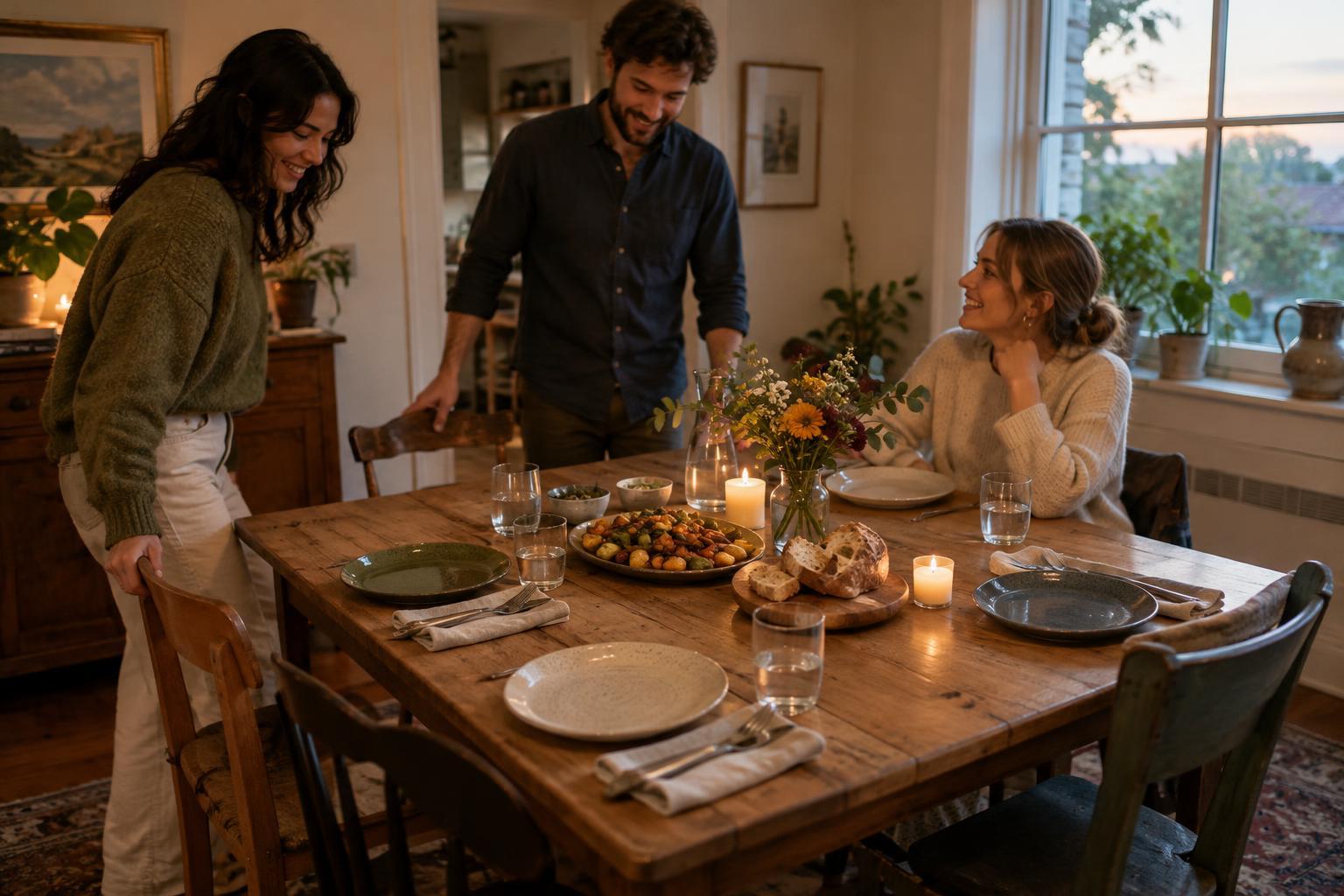
Greet guests, show them where to put their things, and offer a drink. If you need to step into the kitchen, say what you are doing rather than disappearing. Some guests may enjoy helping with a small task, such as bringing water to the table, but do not feel obliged to turn dinner into a group project. The aim is to make people feel at ease, not to keep everyone busy.
Let the evening have some room
Once everyone is seated, you do not need to manage every moment. Serve the food, explain anything guests might need to know, and join the conversation. If a dish takes longer than expected or you forget to put out the bread, make the adjustment and carry on. A relaxed host gives others permission to relax, too.
Clear plates when it feels natural, not the instant someone takes a final bite. Dessert can be served at the table or somewhere more comfortable if you have room to move. At the end of the evening, thank people for coming and leave the serious cleanup until after they go. What guests are most likely to remember is having time to eat and talk together—not whether every detail went exactly to plan.