Start with the room you have now
The first step is not to replace every garland or ornament. Put the holiday items away, then give yourself a little time to see the room without them. A cleared mantel may look bare at first simply because your eye has grown used to a full display. Notice where you actually want warmth or interest: perhaps the sofa needs a softer layer, the entryway needs a welcoming light, or the dining table needs a simple centerpiece.
As you tidy, separate pieces that feel distinctly festive from those that can work all winter. A plain ceramic bowl, a woven basket, a solid-color throw or an unadorned candleholder may be worth keeping out. Storing the rest together makes the transition easier next year and leaves room for objects you use and enjoy every day. You do not need to fill every space that holiday decor occupied.
Bring warmth back with textiles
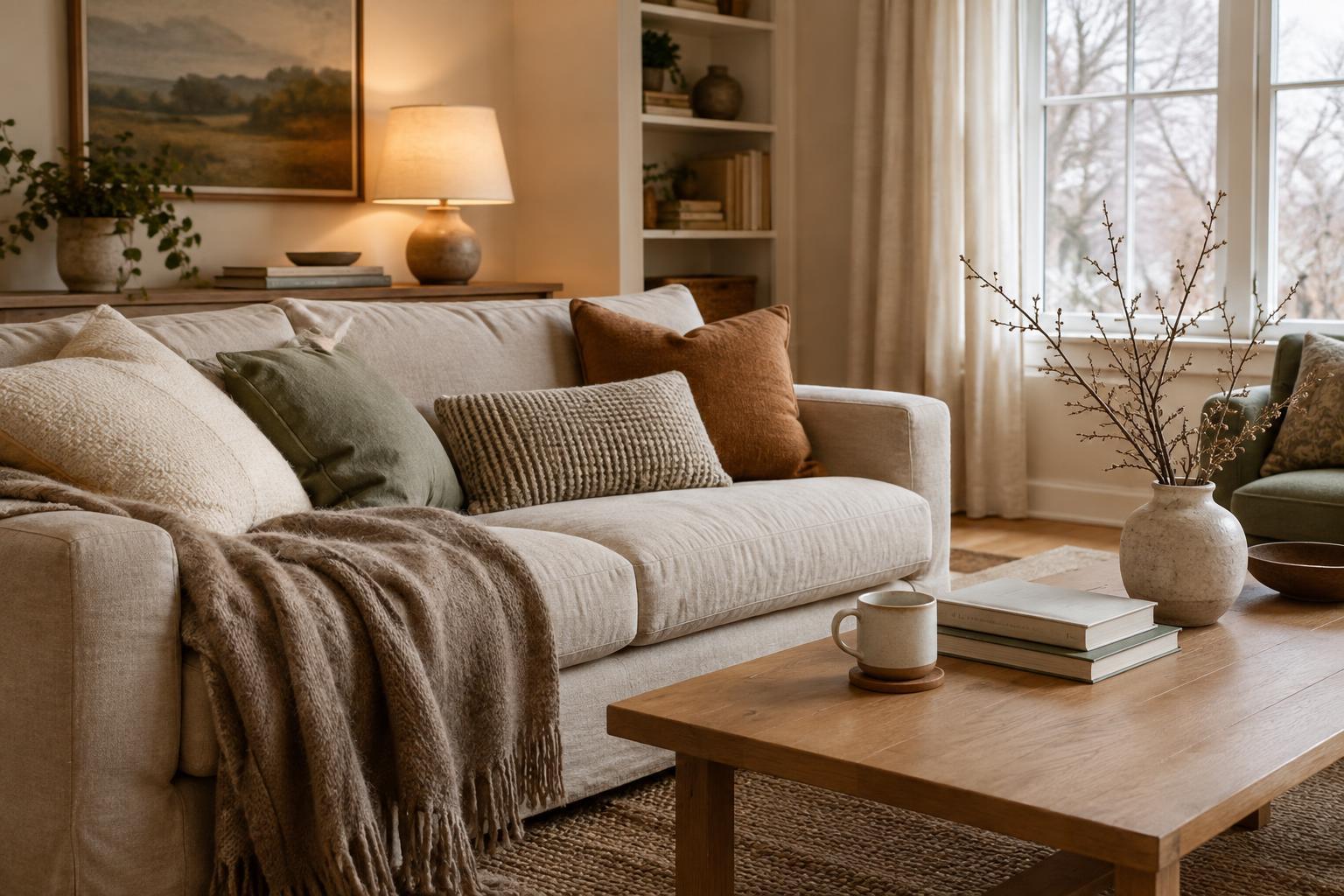
Textiles can change how a room feels without requiring a new arrangement of furniture. Fold a substantial throw over the arm of a chair, or swap a bright holiday cushion cover for one in wool, cotton, velvet or another fabric with visible texture. Mixing a few textures tends to feel more relaxed than matching every piece. Keep the palette connected to what is already in the room so the additions look intentional.
Winter comfort is also practical. A small basket of blankets near the sofa invites people to use them, while a washable runner can soften a dining table without making everyday meals feel formal. If you already own extra pillow covers or linens, try those before buying anything. One or two useful layers often do more for a room than several decorative objects.
Use light to soften the shorter days
After strings of holiday lights are packed away, ordinary lighting may seem harsh or sparse. Rather than adding more decorations, spread light around the room. A table lamp beside a reading chair, a small lamp on a sideboard or a shaded light in an entryway can make those areas feel welcoming. Using several gentle light sources lets you adjust the mood without relying only on a bright overhead fixture.
Candles can add a quiet glow to a dinner table or mantel when used safely and attended. If open flames are not suitable for your home, a battery-operated candle or a low, warm lamp can create a similar sense of softness. Clear space around any light source and choose a spot where cords, shades and nearby fabrics will not be in the way.
Choose natural accents that are not holiday-specific
Winter decorating does not have to mean keeping the tree’s colors or motifs. Bare branches in a sturdy vase, a bowl of citrus fruit, or a small arrangement of greenery can bring shape and life to a room. Choose what you can maintain easily: dried stems need little attention, while fresh greenery may need replacing as it fades. Avoid crowding a shelf with too many small pieces; one arrangement with room around it is often enough.
Color can make the shift feel deliberate. Try building around a neutral you already own, then add a restrained accent such as deep green, warm rust or muted blue. These colors can sit comfortably alongside wood, stone, glass and woven materials without looking tied to a particular holiday. Repeating an accent in two places, such as a cushion and a table napkin, helps connect the rooms without making them look identical.
Make everyday surfaces ready to use
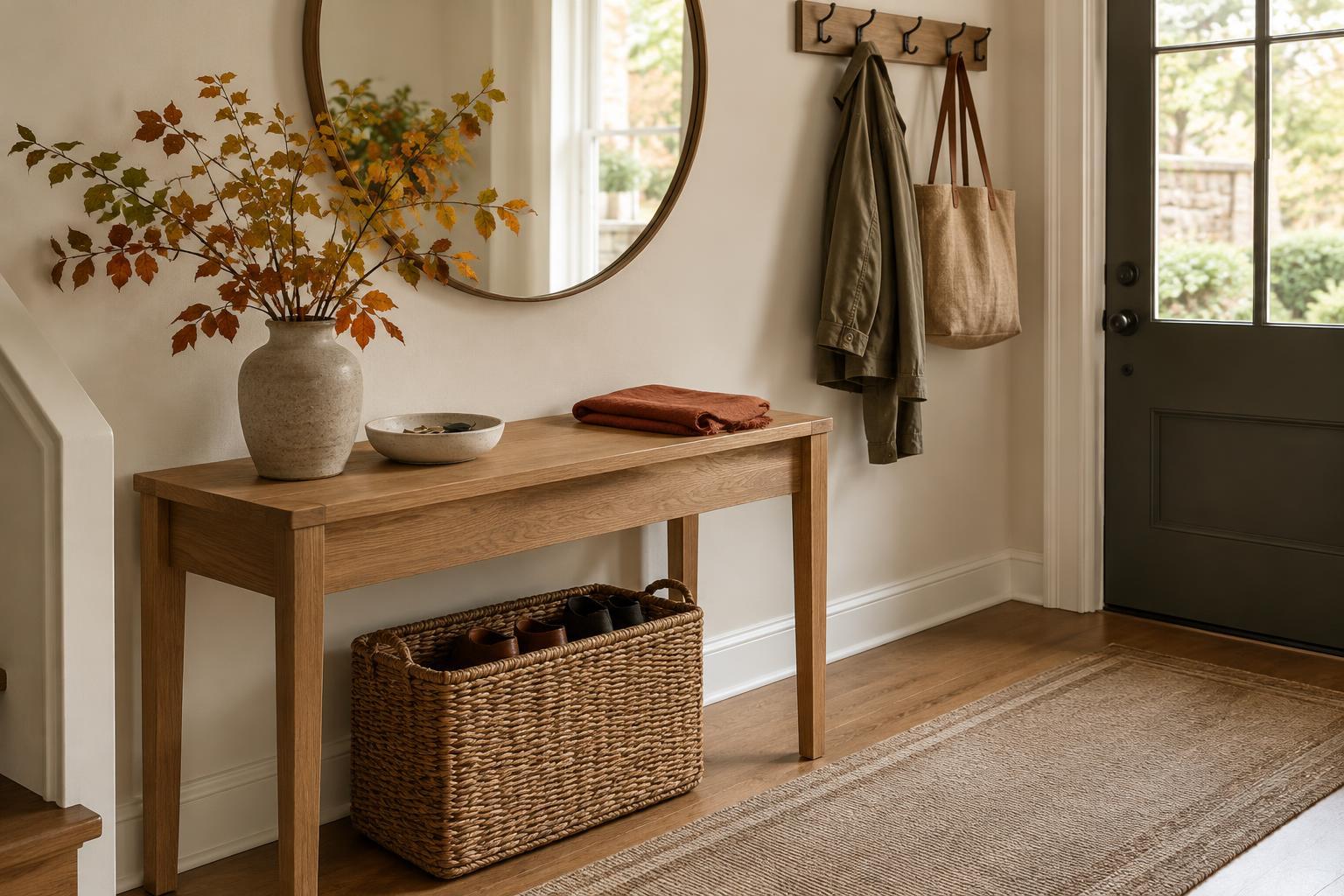
A winter refresh is most successful when it supports daily life. On a coffee table, leave room for a mug and a book rather than covering the whole surface with a display. In the entryway, a tray for keys and a clear place for wet-weather essentials may feel more welcoming than decorative clutter. Small functional choices can give a room the settled feeling that disappears when holiday arrangements are removed.
For the dining table, keep a simple base ready for ordinary meals: a runner or placemats, napkins you like using and perhaps one low centerpiece that can stay put while people talk across the table. Bring out extra candles or serving pieces when guests arrive instead of leaving everything on display. The aim is not to make winter look like another holiday season. It is to let the house feel comfortable, calm and ready for whatever an ordinary winter day brings.