Start with the door, not the wreath
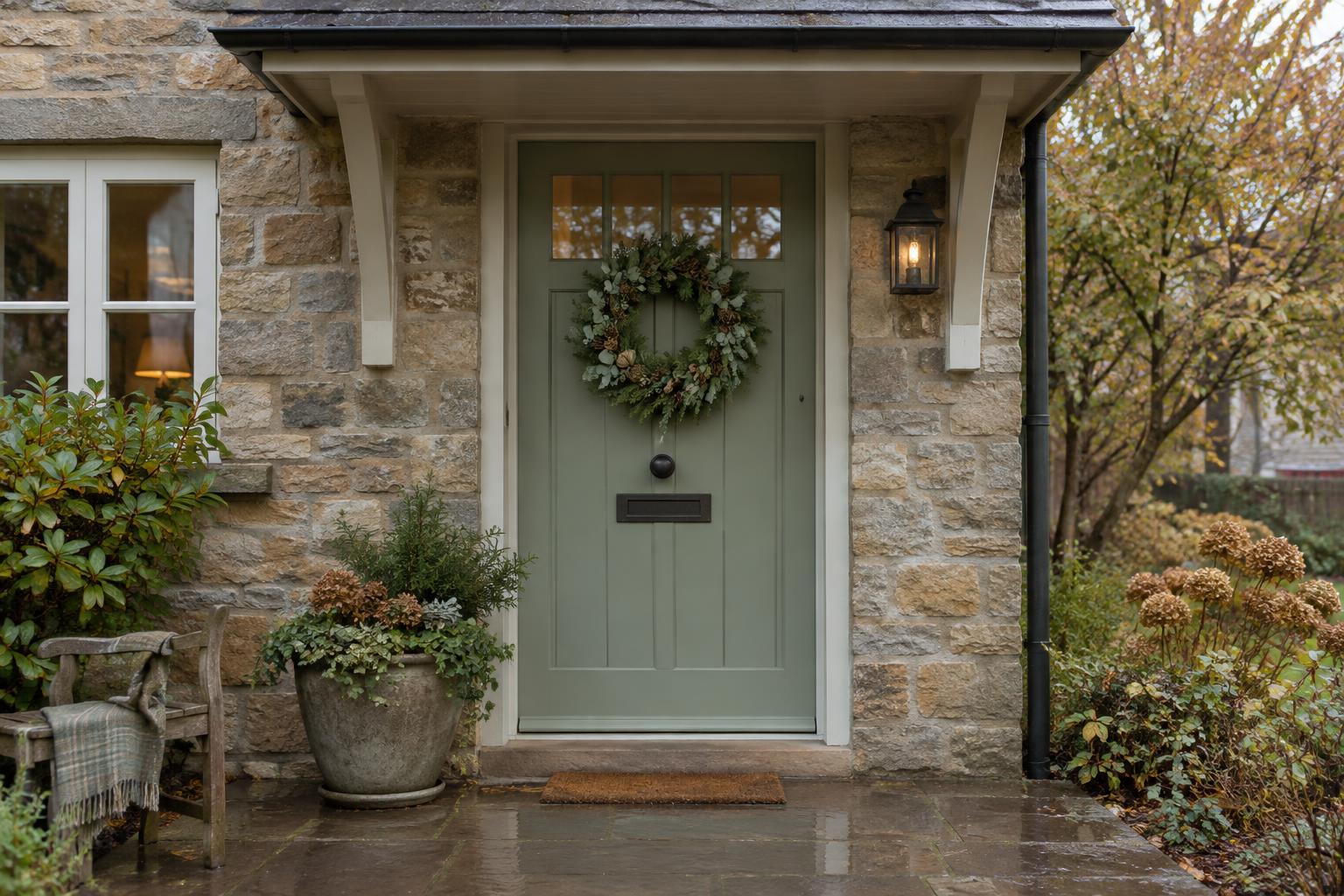
Before choosing a wreath, measure the usable width of your door and look at everything already on it: a window, knocker, number, peephole or prominent panel. A wreath often feels balanced when it occupies roughly half to two-thirds of the door’s width, but treat that as a starting point rather than a rule. A broad, plain door may suit a generous wreath, while a narrow door with detailed trim may look better with a smaller one.
Check depth as well as diameter. A wreath with projecting branches, flowers or a large bow may catch on a screen or storm door even if it looks right from the street. Measure the space between the doors when both are closed, and allow room for the wreath and its hanger. Open the door fully, too: nearby walls, sidelights and handles can affect where the wreath can sit without getting knocked.
Match the material to the location
The most useful question is whether your door is sheltered. Under a deep porch, you can consider softer materials such as dried grasses, fabric ribbon and delicate foliage. On an exposed door, sturdy bases and well-secured decorations are usually easier to live with. Look for a frame that holds its shape, with stems and accents attached firmly enough to withstand routine door movement.
Natural greenery brings texture and a familiar seasonal scent, but it may dry, shed or change color over time. Dried botanicals can be especially fragile in damp or windy spots. Faux foliage is reusable and can be a practical choice for an exposed entry, though its finish matters: select leaves and stems that look pleasing up close, not just in a product photo. If you prefer a quieter look, a simple grapevine, twig or metal hoop base can carry a few seasonal accents without relying on a dense arrangement.
Think through sun, rain and wind
Weather exposure affects more than durability. Strong sun can fade some ribbons and faux materials, while repeated rain can leave absorbent decorations looking tired. Humid conditions may be hard on untreated natural elements. If your door faces the weather, avoid paper, unprotected fabric and pieces that will hold water against the door. Choose decorations that can dry easily, and check any material-care information supplied with the wreath.
Wind deserves its own check. Lightweight ornaments, long ribbon tails and loose stems can flap, snag or make noise against the door. A compact shape with shorter details is often a calmer choice for a breezy entrance. Whatever the material, inspect the wreath after severe weather and bring it indoors when conditions are likely to damage it. No wreath needs to stay outside through every storm to earn its place in a seasonal display.
Choose a secure way to hang it
The hanger should suit both the wreath’s weight and the door surface. An over-the-door hanger is convenient if it clears the frame and does not interfere with the door closing. A removable hook may be suitable for a smooth surface when used within its stated weight limits; follow its application instructions and take care with painted or delicate finishes. If you already have a secure hook, a short loop of ribbon or wire can set the wreath at the right height.
Stand back and check the placement from the walkway. The center of the door is a useful default, but a window or knocker might call for a slightly different position. Add a soft backing or discreet bumpers where the frame touches the door to reduce rubbing. Then close and open the door several times to make sure the arrangement stays put.
Make seasonal changes easy
A wreath does not need an entirely new base for every season. A reusable frame in a neutral material can be refreshed with a small cluster of greenery, a change of ribbon or a few removable accents. Keep the palette connected to your entry rather than matching every decoration exactly: warm natural tones, for example, can work across several seasons with only a change in foliage or texture.
When the season ends, remove damp or damaged pieces, gently clear away dust and let the wreath dry before storing it. Use a box or wreath bag that will not crush projecting details, and keep it somewhere reasonably dry. Choosing a wreath you can hang, care for and store without difficulty makes it more likely to be a welcoming part of your home year after year.