Build a base that works year-round
The most useful bedding layers are the ones you can adjust without remaking the whole bed. Start with a fitted sheet that stays comfortably in place and a top sheet if you like having a light cover on its own. Then add a blanket, quilt or duvet that can be pulled up, folded down or removed. This simple structure gives you more options than relying on one heavy cover.
Consider how the fabric feels against your skin as well as how it looks. Cotton percale often feels crisp, while cotton sateen has a smoother, drapier finish. Linen tends to feel relaxed and airy, though its texture is more noticeable. If you enjoy a soft, cozy surface, brushed cotton may suit cooler months. Fabric weight and weave can vary, so use these descriptions as a starting point rather than a guarantee of how a particular set will sleep.
Give every layer a clear job
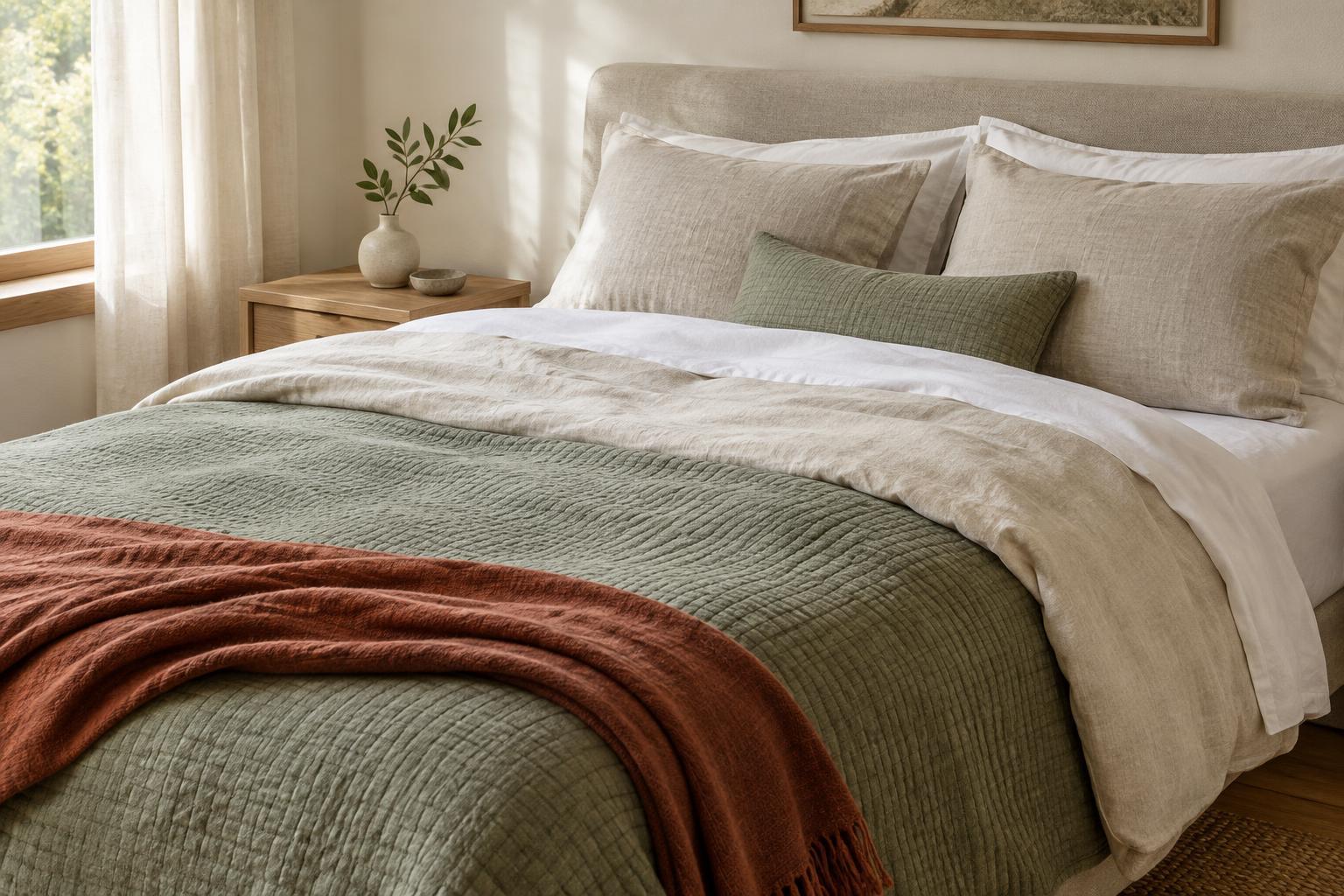
Think of the bed in three parts: a comfortable surface, an everyday cover and an optional extra. Sheets form the surface and are easiest to launder regularly. A quilt, lightweight duvet or blanket can serve as the everyday cover. A throw or additional blanket at the foot of the bed supplies extra warmth when needed without making the entire arrangement heavier every night.
An extra layer is most useful when it is easy to reach and large enough to cover you comfortably. A narrow decorative throw may look inviting but offer little help on a chilly night. If you share a bed and prefer different levels of warmth, separate blankets over a shared sheet can let each person adjust their side. You can still place one bedspread loosely over the top during the day for a unified look.
Adjust for warm nights and cool mornings
During warmer stretches, try removing weight before replacing every piece of bedding. Fold the duvet to the foot of the bed or store it nearby, and sleep under a sheet or light quilt. In a room that cools toward morning, leave a blanket within reach rather than starting the night beneath it. This lets you respond to the temperature you actually feel, not just the temperature when you first get into bed.
When nights become cooler, add a blanket between the sheet and main cover, or change to a warmer duvet if you already own one. Add one layer at a time and give yourself a few nights to judge the result. Too many thick layers can feel restrictive, while several manageable layers make it easier to fine-tune warmth. Room temperature, personal preference and the warmth of a mattress or mattress protector can all affect what feels comfortable.
Make the layers easy to live with
Practical details matter as much as fabric choice. Check care labels before buying a large cover, especially if you plan to wash it at home. A duvet with a removable cover may be simpler to refresh than a bulky, one-piece comforter, but only if changing the cover fits your routine. Keep spare bedding clean and dry, and avoid compressing it so tightly that it is difficult to take out when the weather shifts.
To make daily bed-making easier, leave the bottom edge of a quilt or duvet loose enough to pull back. Fold the optional blanket neatly across the foot of the bed or place it in a nearby basket. You do not need a stack of pillows to create a layered appearance: a smooth sheet, a softly folded cover and one accessible extra layer give the bed both texture and purpose.
Use color and texture without adding unnecessary weight
Layering can make a bedroom feel welcoming even when the bedding is light. Try related shades in different textures, such as a smooth sheet beneath a gently textured quilt. A contrasting blanket at the foot of the bed adds depth and can change the room’s mood without requiring a new full set of linens.
Choose the layers you will actually use first, then consider the finishing touches. A flexible bed might have only sheets, one main cover and a blanket that moves on and off as needed. That restraint is useful across changing temperatures: the bed stays inviting, and comfort is a small adjustment away.