Start with how the sofa is used
The best upholstery fabric is not necessarily the toughest-looking one. It is the one that suits the people who sit on the sofa, the room around it and the amount of care you are willing to give it. Before comparing swatches, think about where wear is most likely: a favorite seat, arms used as perches, or cushions shared with pets. Consider whether meals and drinks regularly move into the living room, too.
A sofa in a quiet sitting room can accommodate a different fabric from one used for movies, naps and everyday lounging. If the sofa will work hard, look for a fabric sold specifically for upholstery rather than a decorative fabric intended for light use. Ask the retailer how the fabric is expected to wear and what cleaning methods the sofa maker recommends. A beautiful choice will be easier to enjoy when its upkeep feels realistic.
Compare fibers without relying on one label
Fiber content affects feel, appearance and care, but it does not tell the whole story. Cotton and linen can offer a relaxed, breathable look; some versions also wrinkle or show marks readily. Wool may feel warm and resilient, though its texture and cleaning needs vary. Polyester and other synthetic fibers can be useful in upholstery designed for frequent use, especially where easy maintenance matters. Blends may balance qualities from more than one fiber.
Rather than assuming that a natural or synthetic fabric is always better, compare the specific fabrics in front of you. Check the manufacturer’s stated suitability for upholstery, and ask about abrasion and pilling information if it is available. These tests can help you compare options, but they cannot predict exactly how a fabric will perform in your home. Construction, cushion shape, exposure to sunlight and daily habits all affect the result.
Look closely at weave and texture
A tightly constructed fabric often feels like a sensible starting point for a busy sofa. Run a hand over the sample, gently press it and look at it from different angles. Does it feel comfortable against bare skin? Do the threads seem easy to snag? If pets use the sofa, pay particular attention to loose loops or raised yarns that claws might catch.
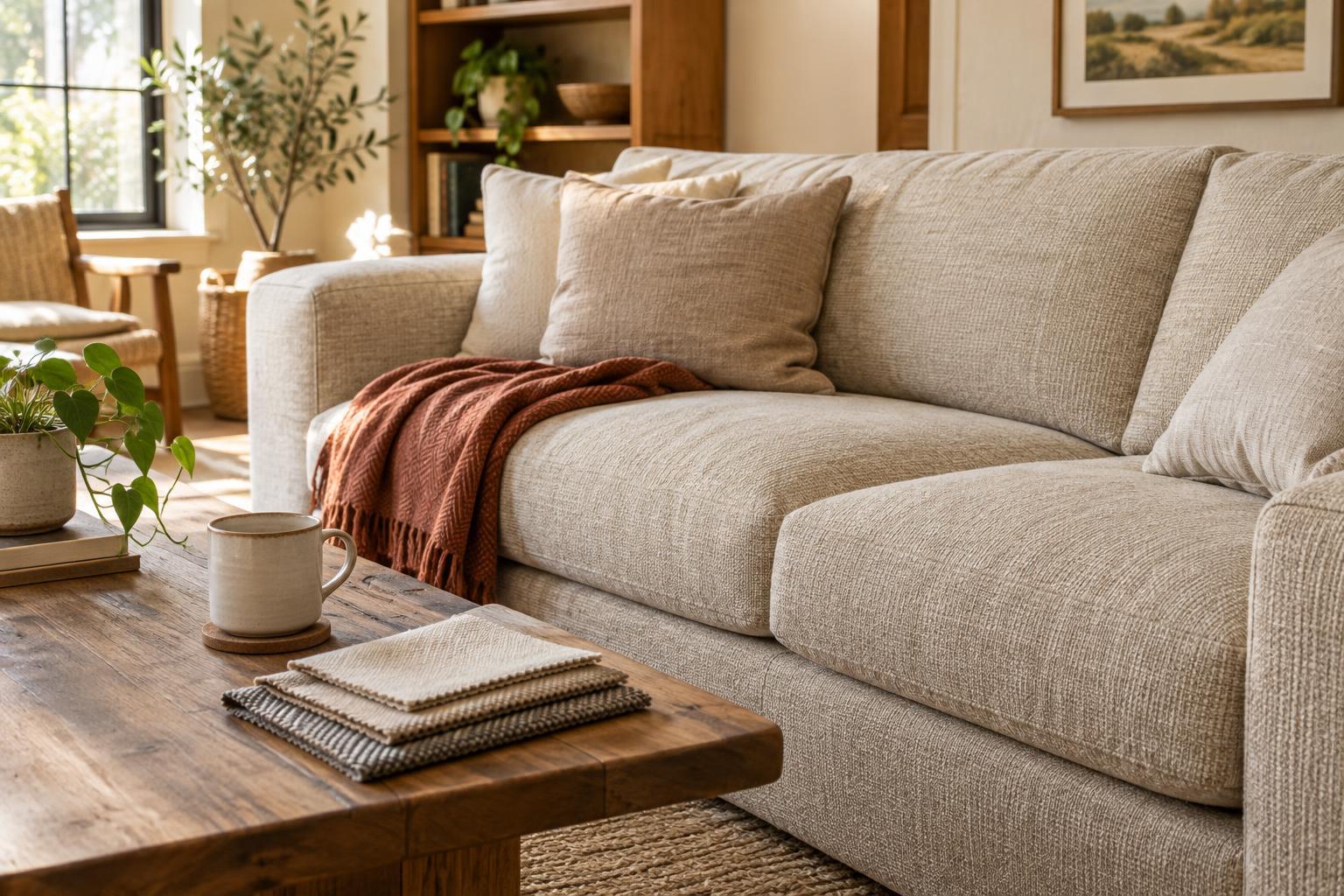
Texture changes both the mood of the room and what you notice between cleanings. A flat, smooth surface can look crisp but may make lint or marks more apparent. A small-scale weave or subtle variation in color can make everyday crumbs and creases less conspicuous without looking busy. Deep pile and plush fabrics can feel inviting, yet they may show changes in nap where people sit. Choose a surface you like after it has been touched and sat on, not only when it is perfectly brushed.
Choose color for the whole room and the whole week
A sofa takes up a large visual area, so its color should work with flooring, walls and the textiles you already own. Mid-tone colors and heathered fabrics can be forgiving choices for daily use, while very pale or very dark solids may reveal certain marks more clearly. No color hides everything: pet hair, dust and spills will show differently depending on the fabric and the light.
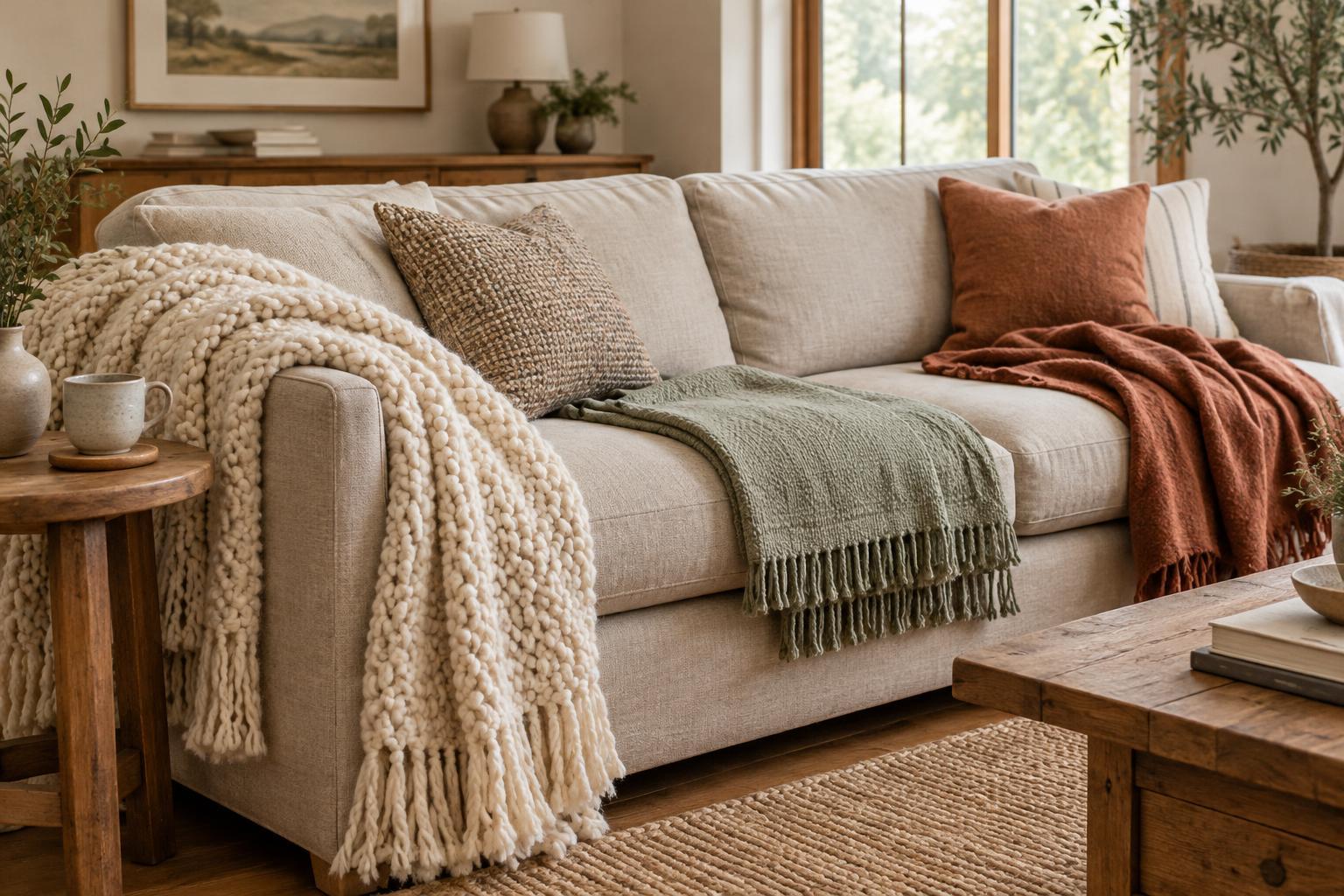
Bring samples home if you can. Set them beside the rug and curtains, then check them in morning light, evening light and lamplight. Place each sample where the sofa will sit rather than judging it only at a store counter. If you like changing cushions and throws with the seasons, a fabric that works with several accent colors may offer more flexibility than a shade chosen for one particular arrangement.
Make care instructions part of the decision
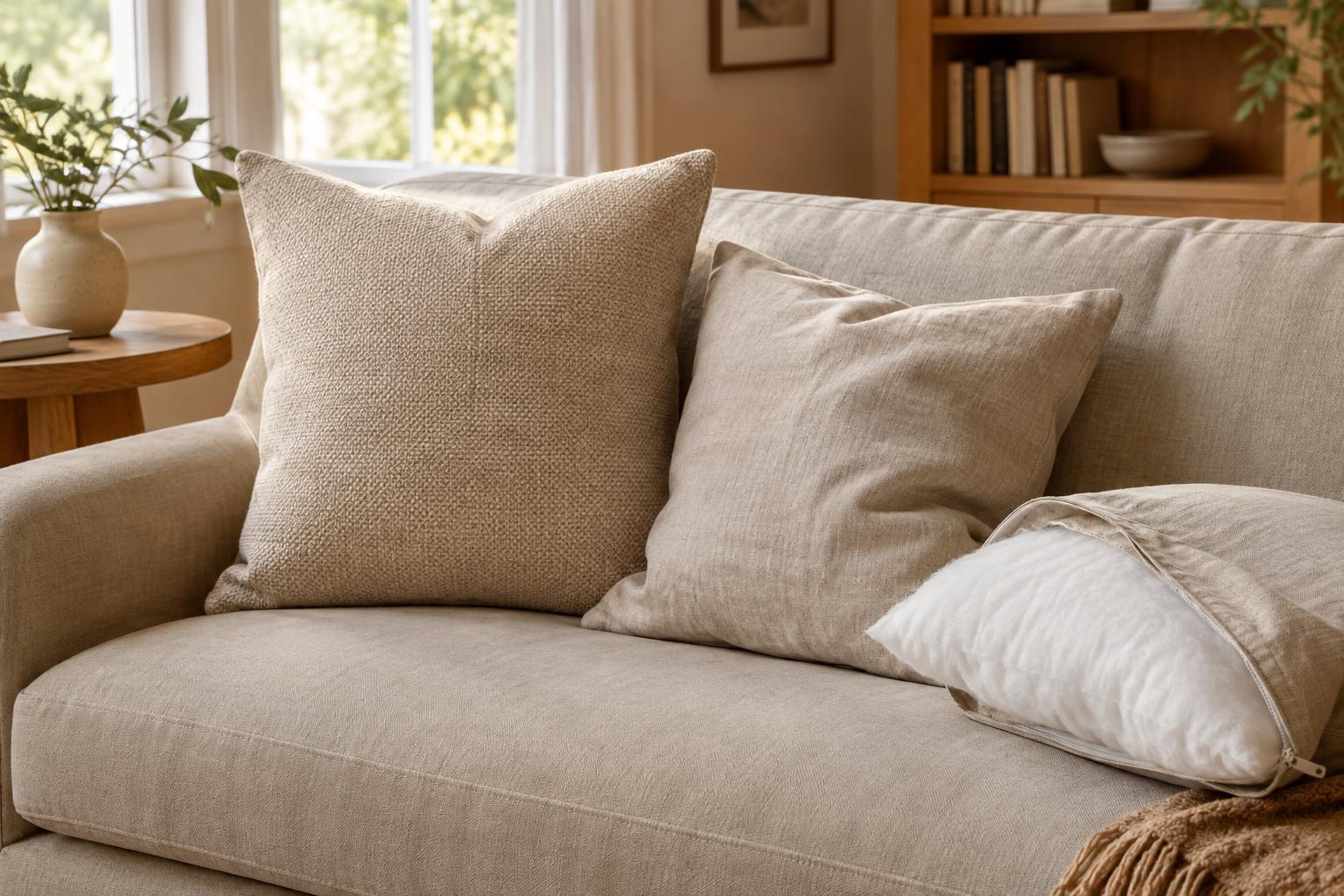
Before ordering, read the sofa maker’s care guidance for both the upholstery and the cushions. Ask whether covers are removable and, if so, whether they can actually be washed at home. Removable does not automatically mean machine-washable. Check whether the fabric calls for professional cleaning, a particular spot-cleaning method or prompt attention to spills. If those requirements feel difficult to maintain, keep looking.
Request a generously sized swatch when possible. Hold it against clothing that tends to shed lint, see how easily it releases crumbs and consider whether its texture remains pleasant after repeated handling. You can also ask about a fabric’s resistance to fading if the sofa will sit in strong daylight. Once the sofa arrives, regular gentle vacuuming and following its care label can help keep it looking inviting. The right fabric is one you can live with comfortably, not one you have to protect from ordinary life.